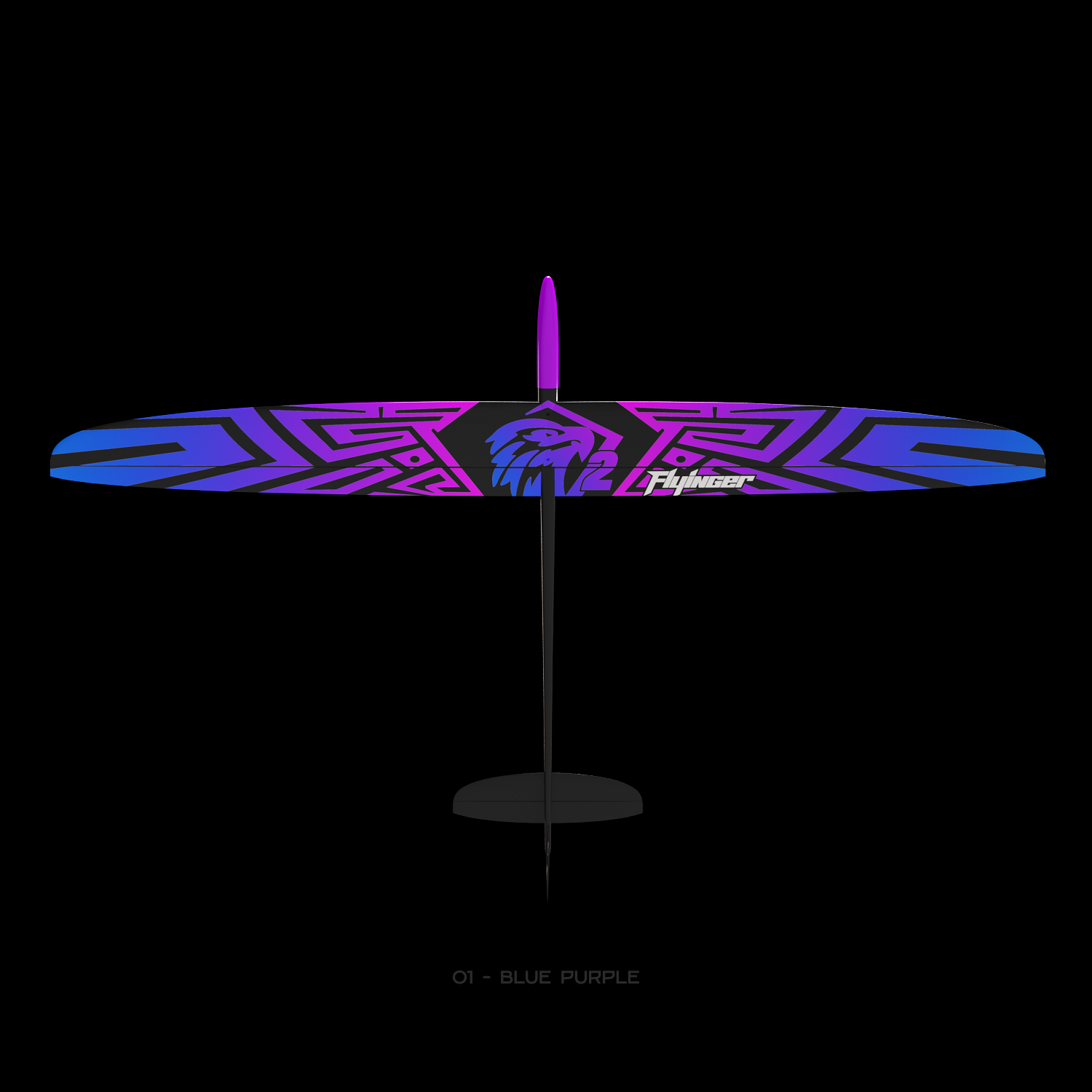
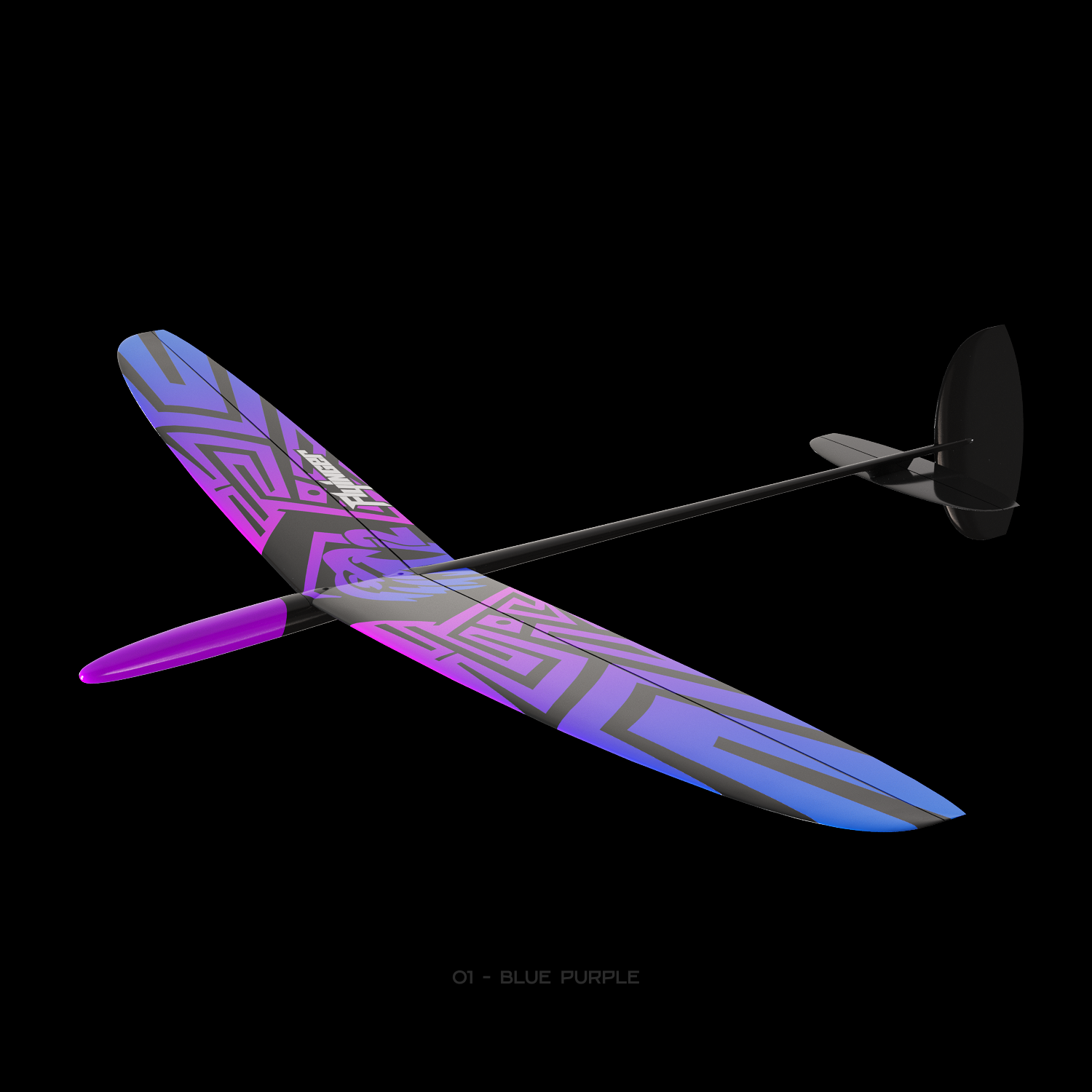
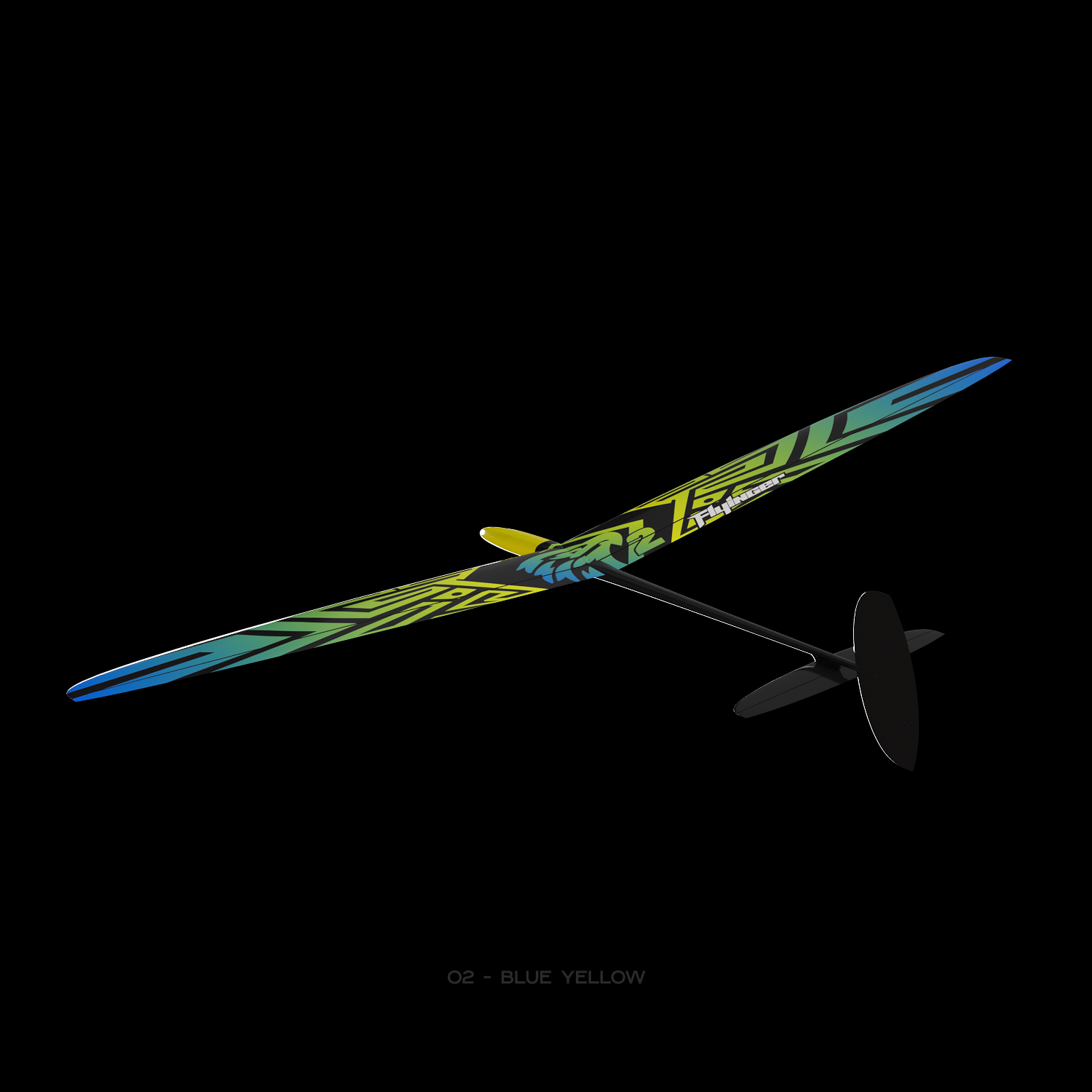
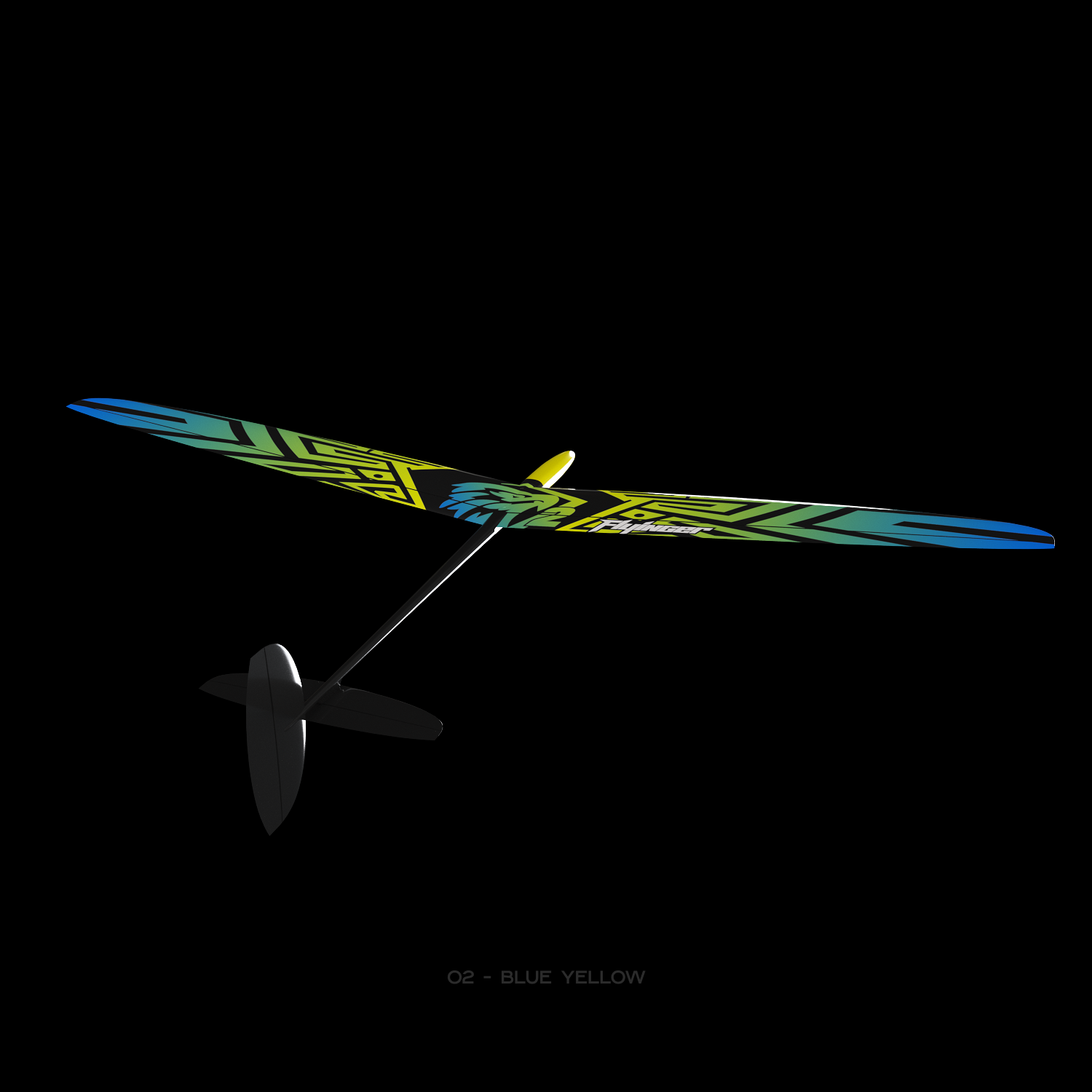
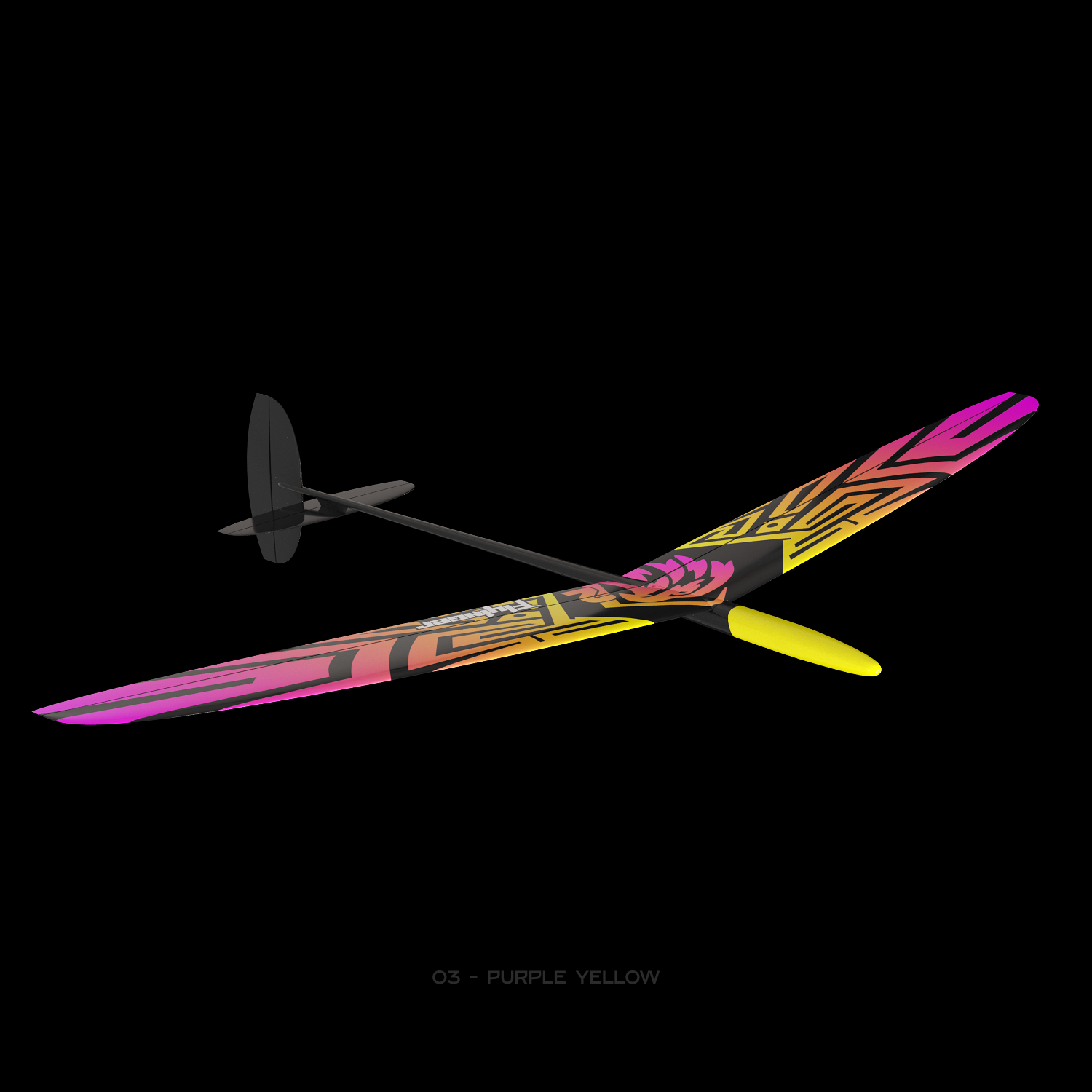
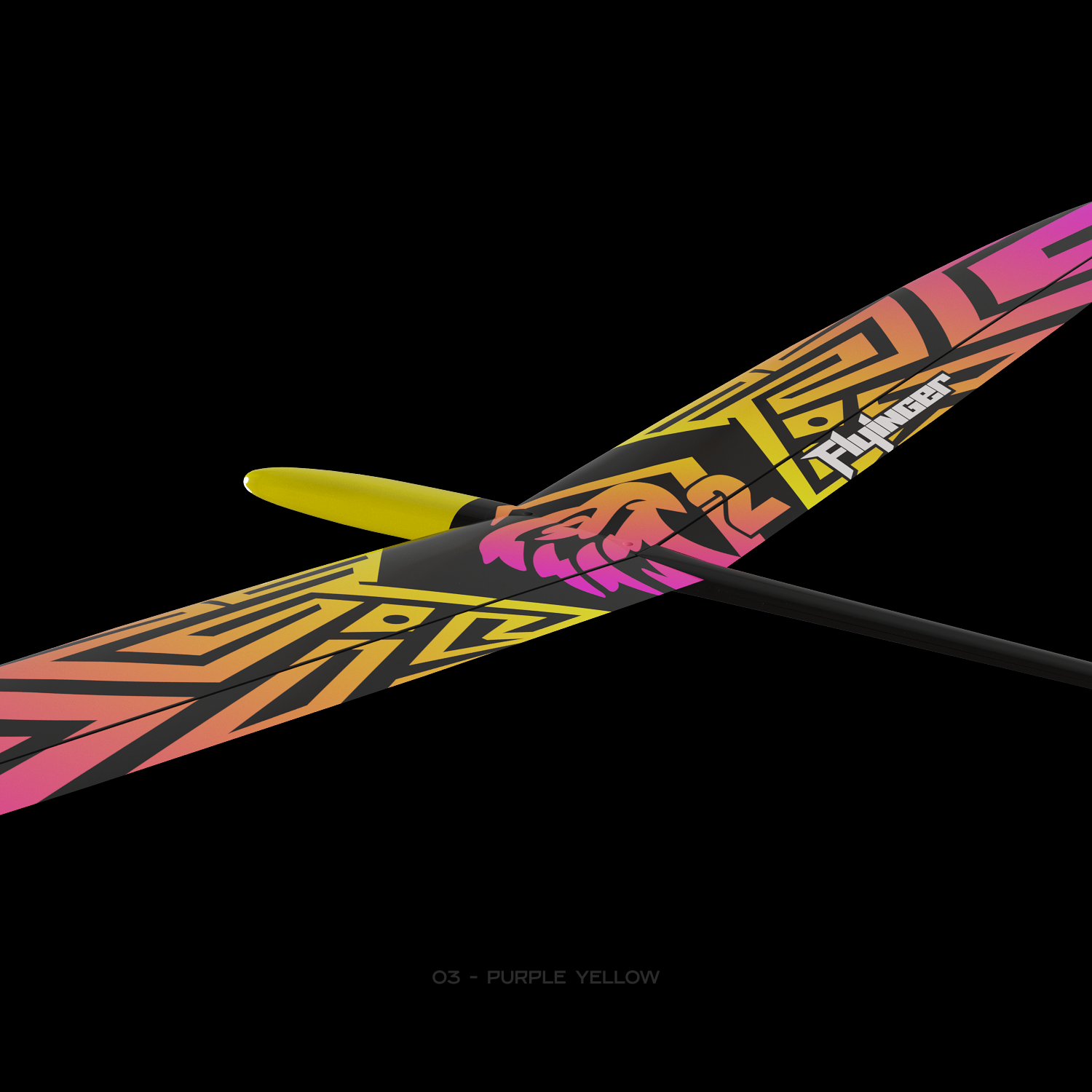
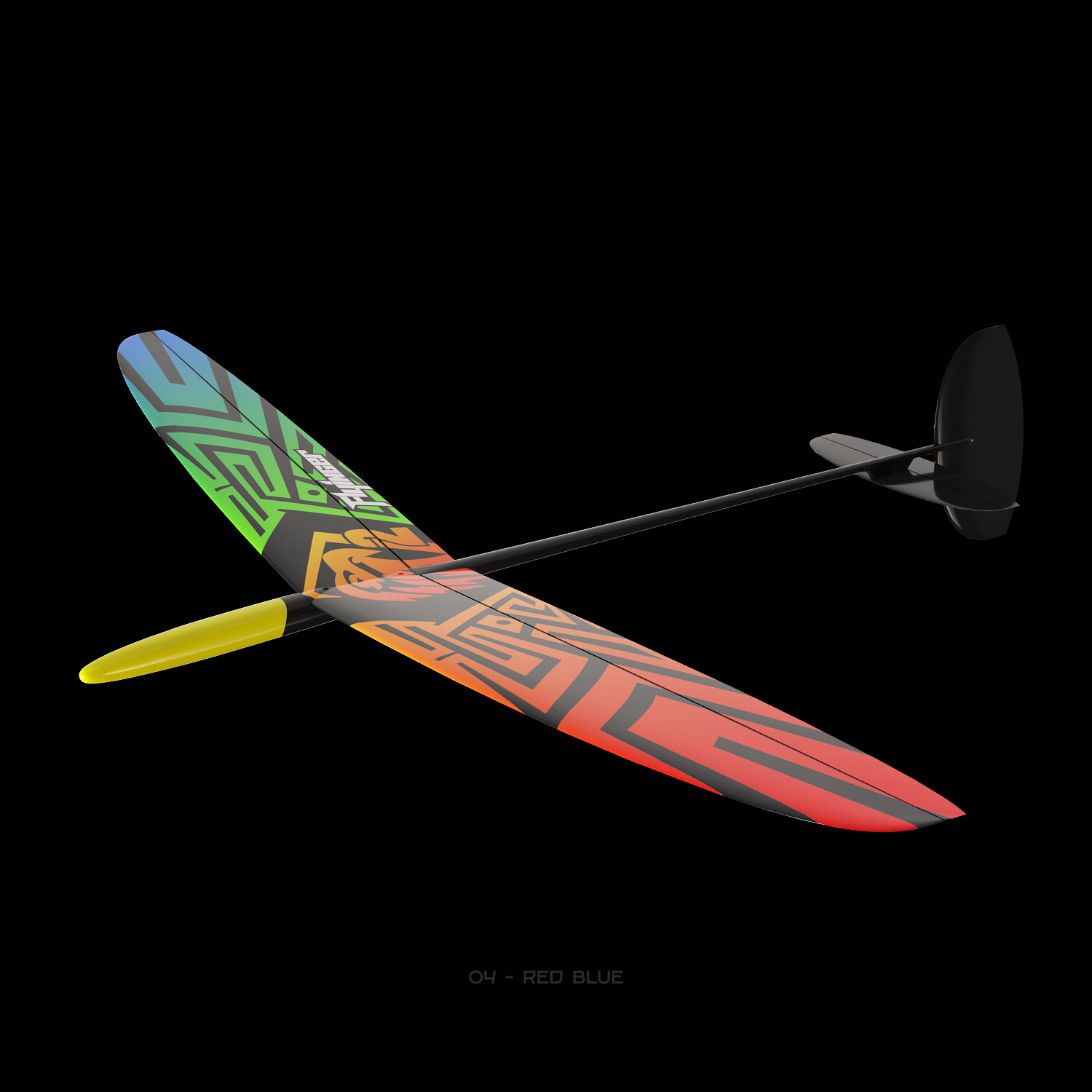
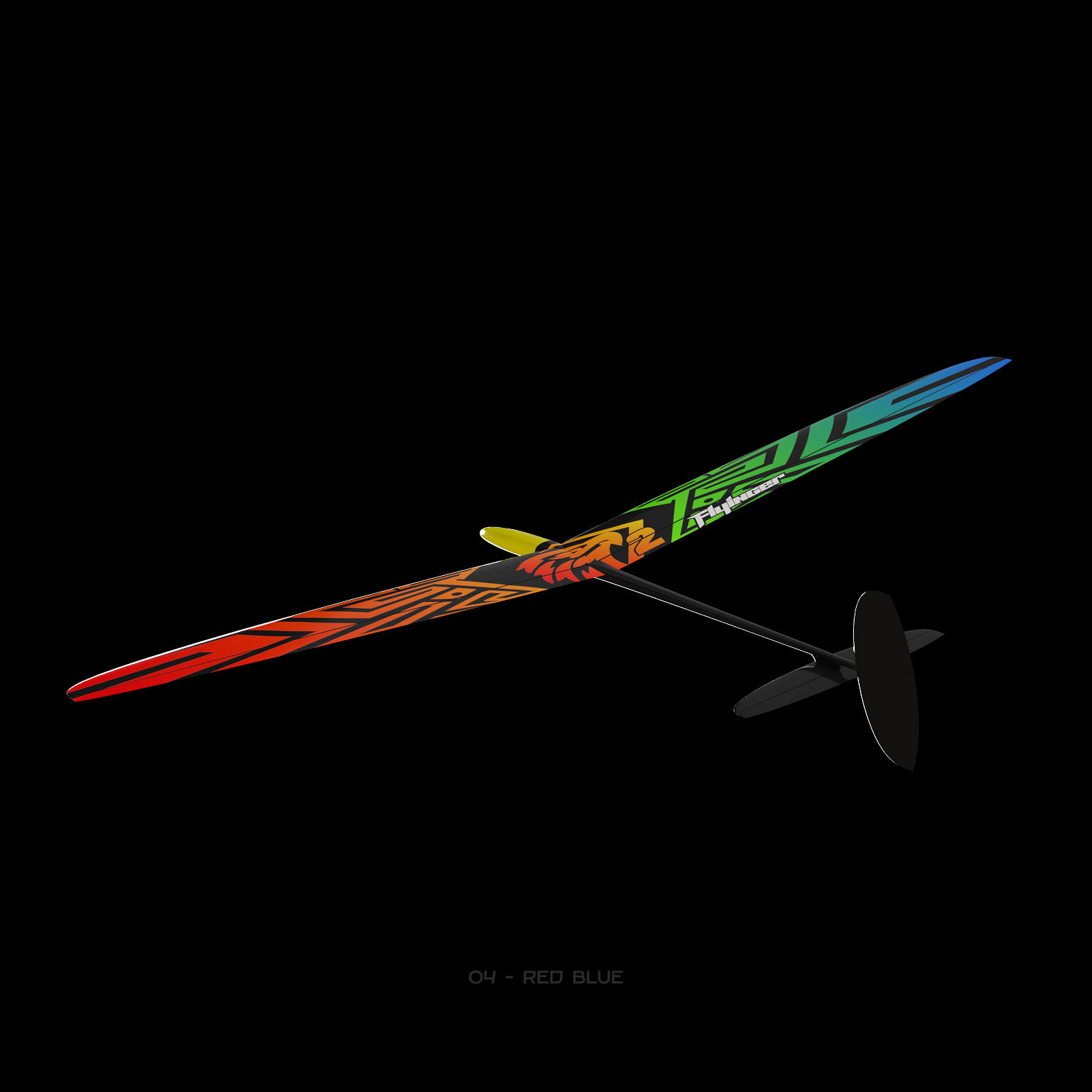
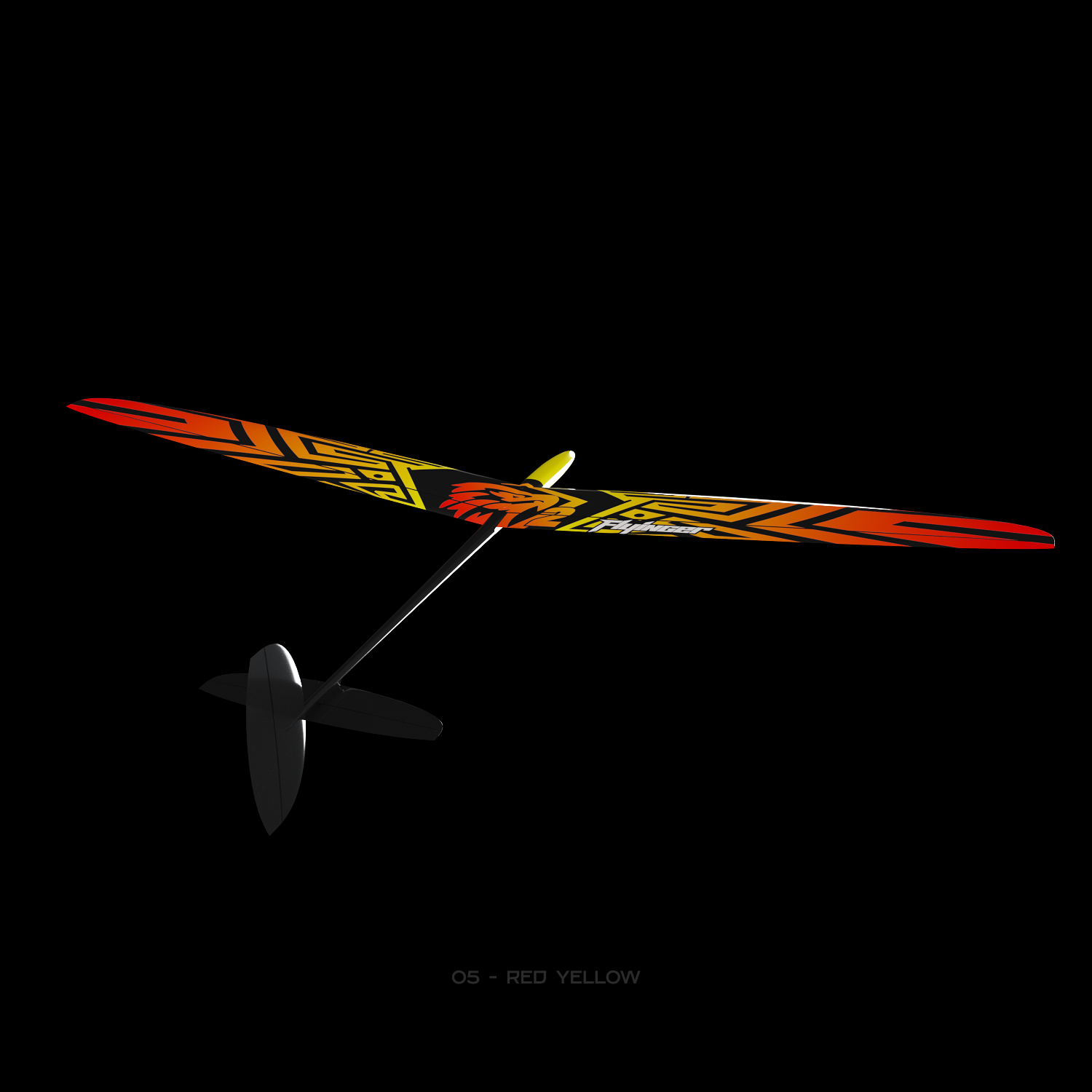
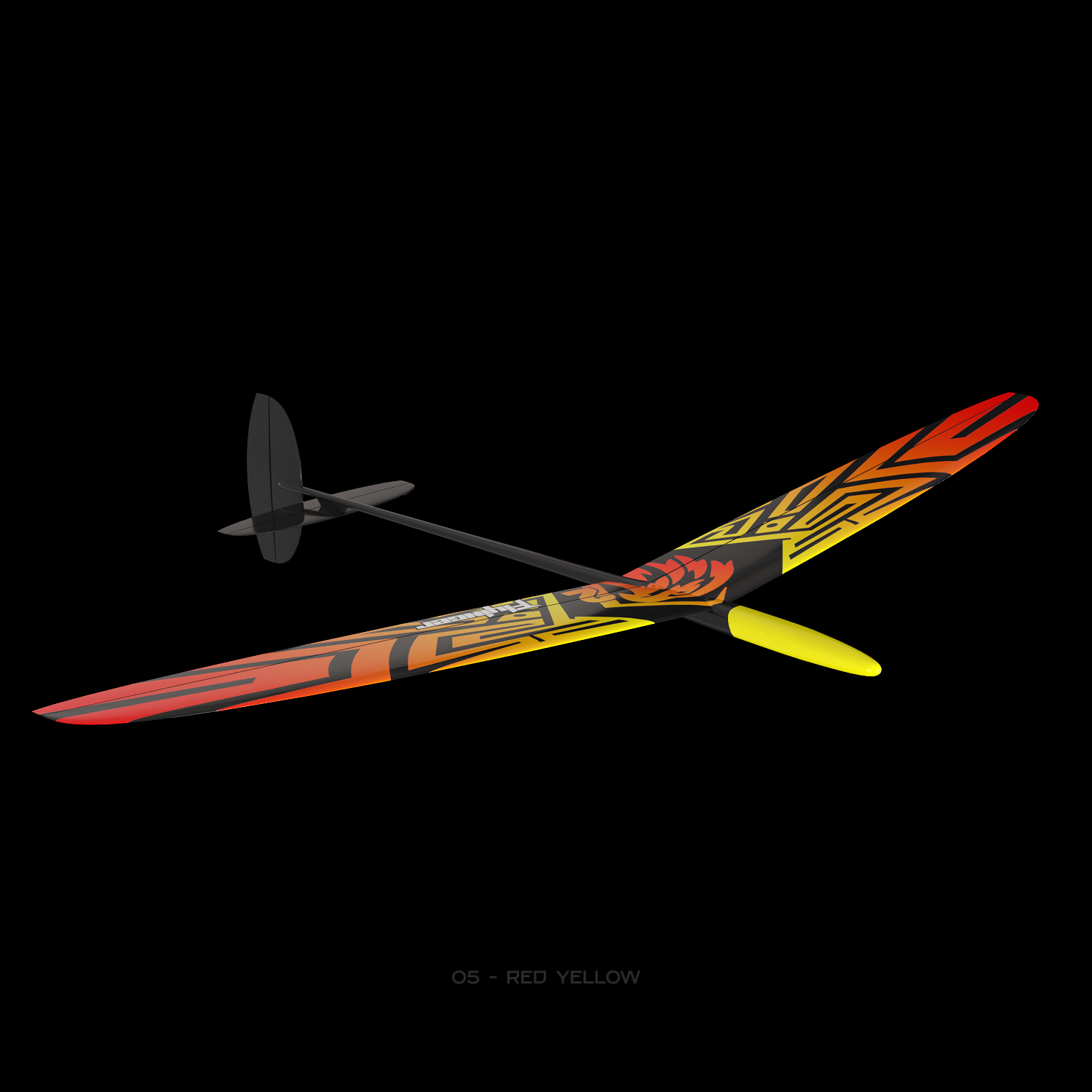
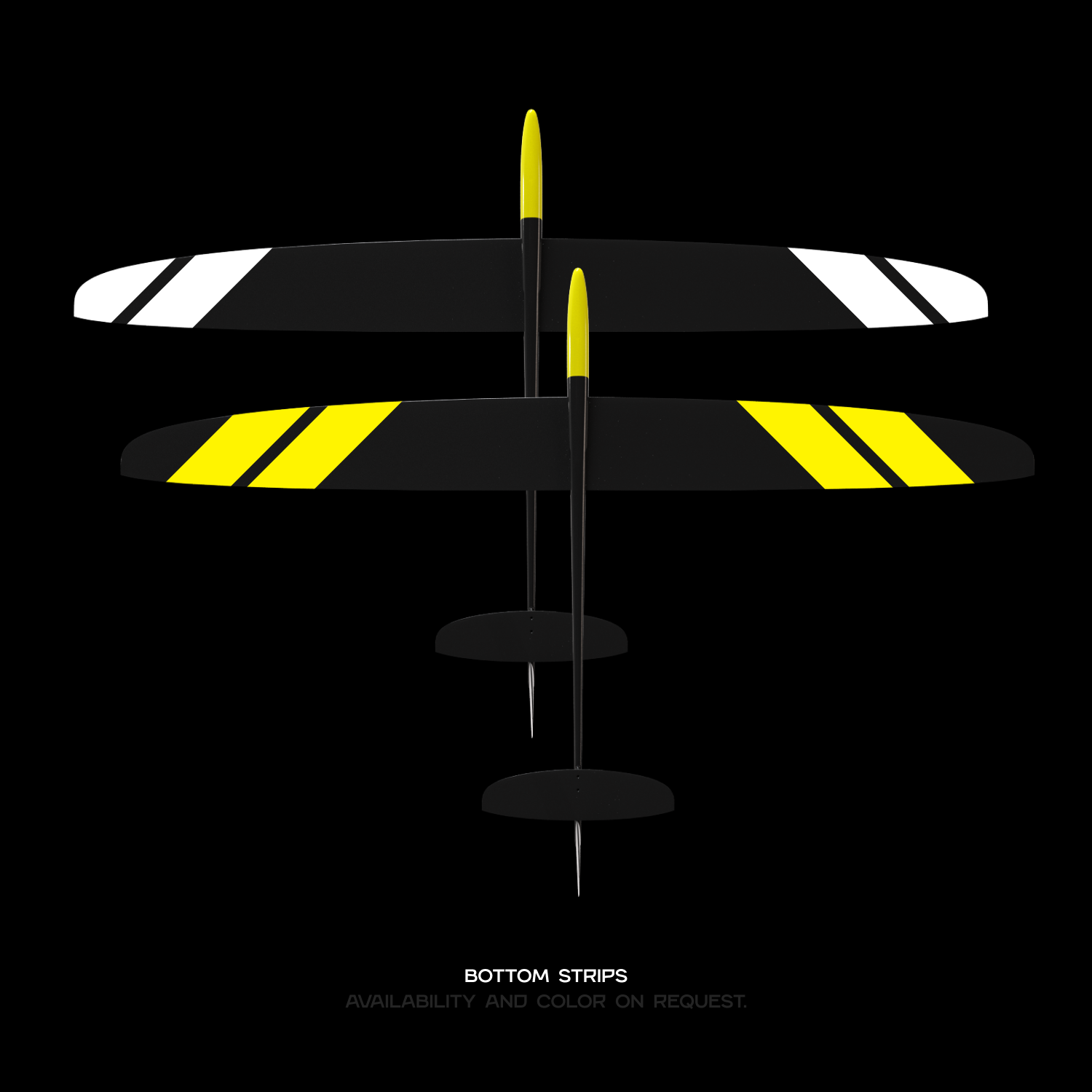
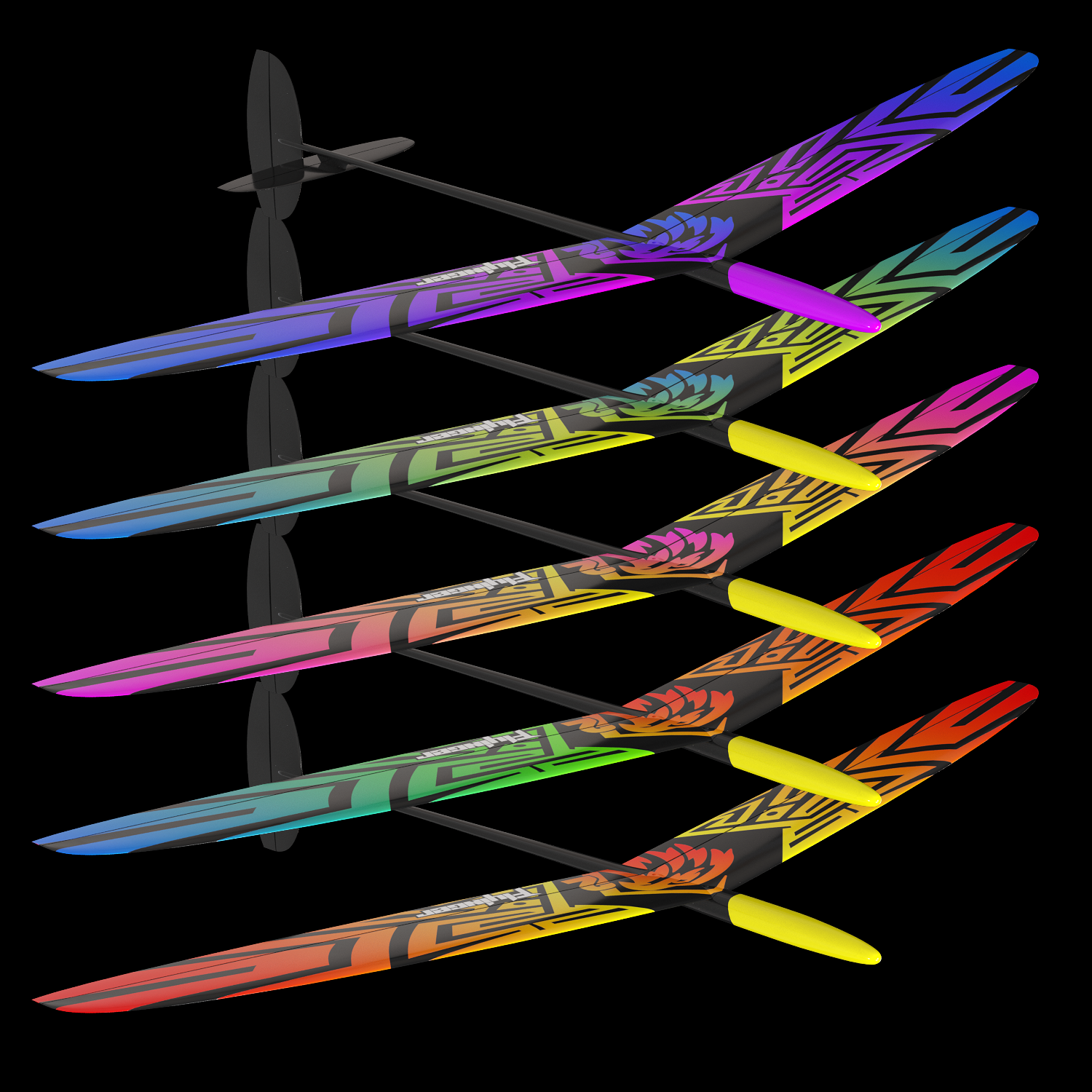
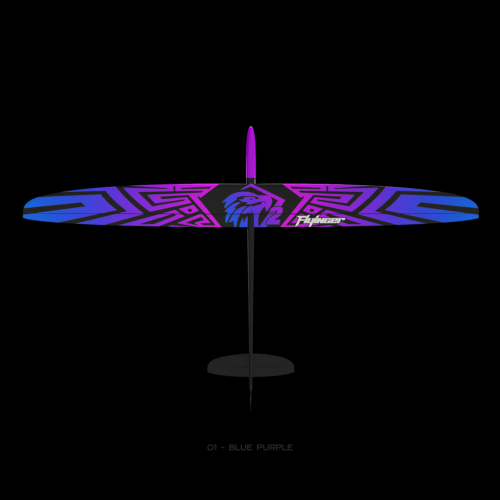
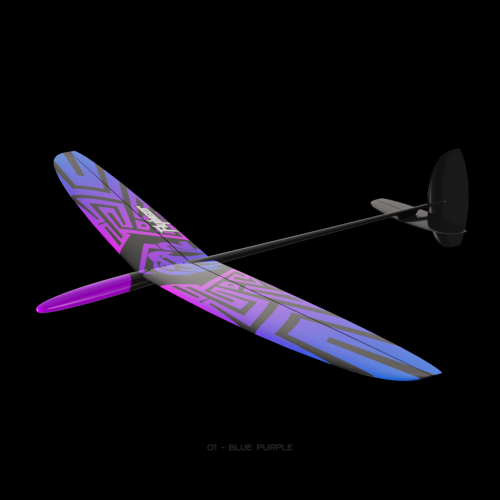
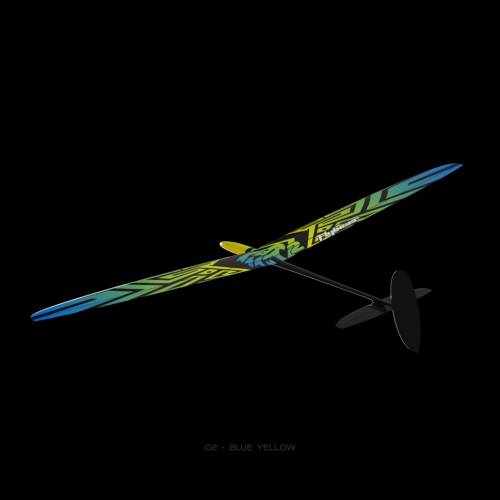
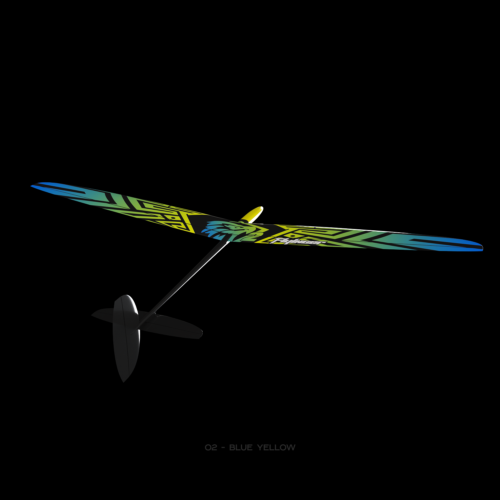
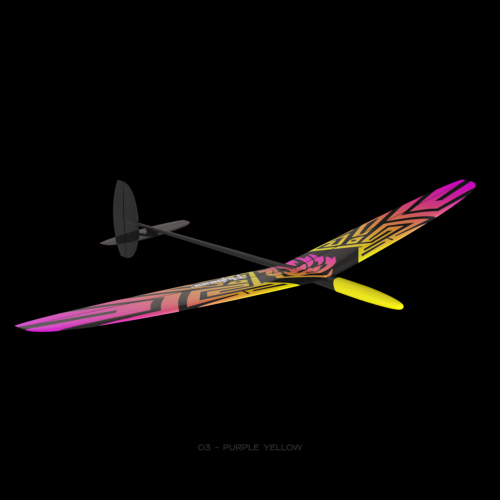
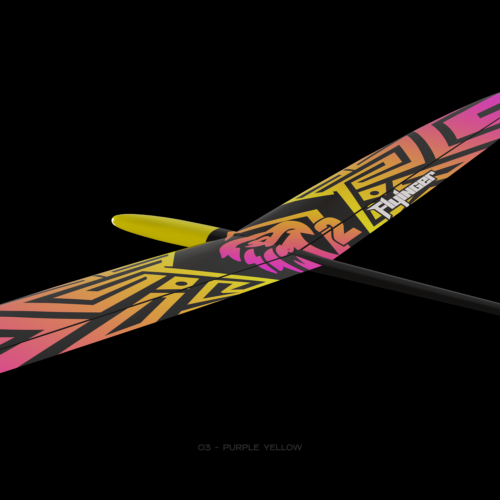
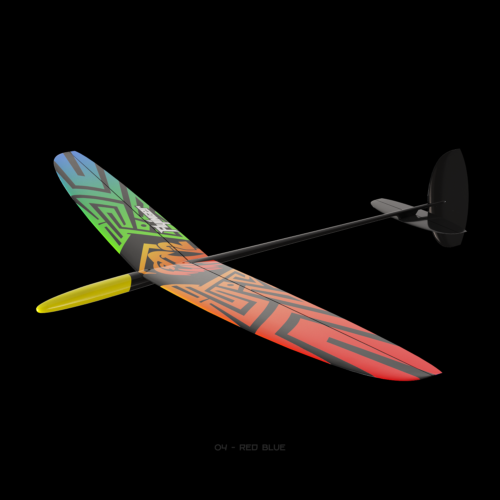
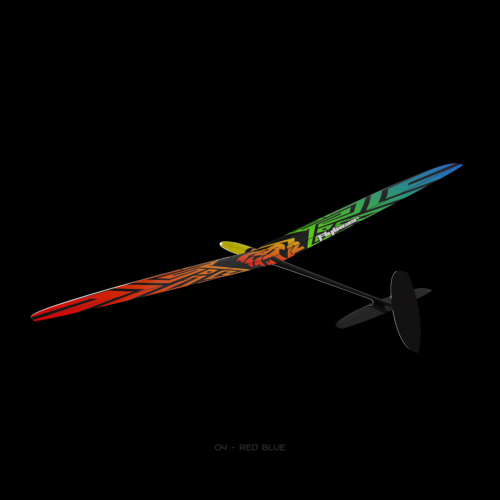
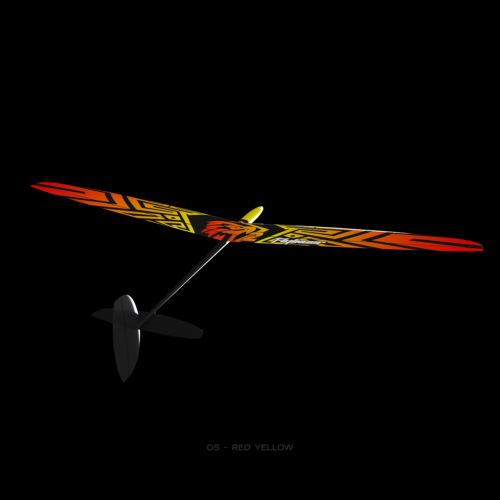
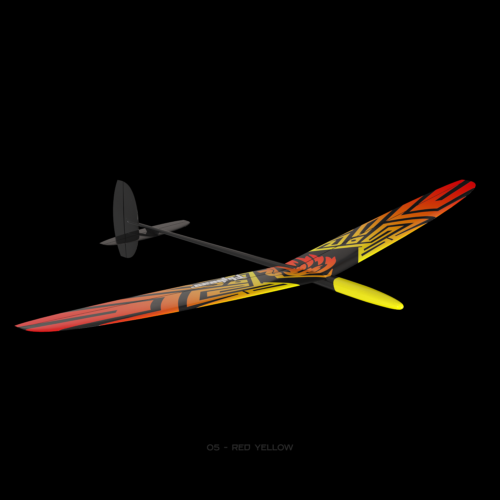
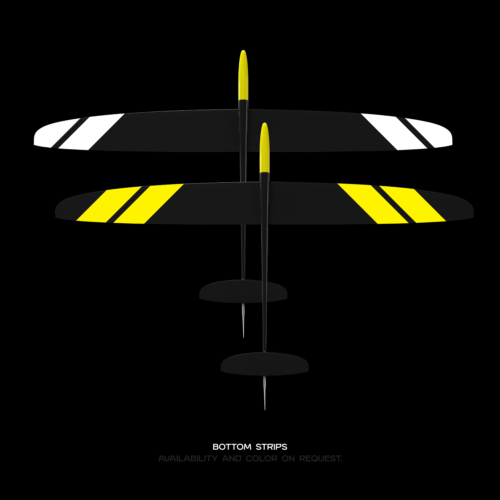
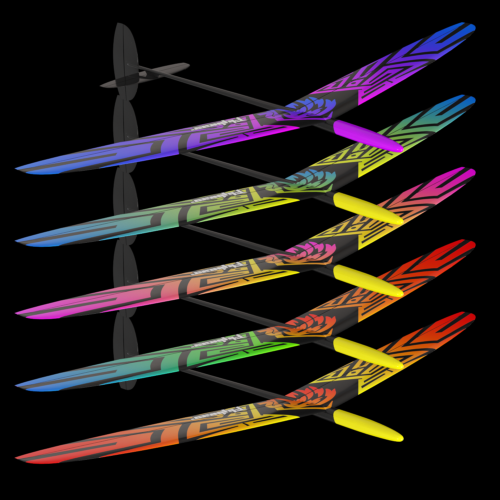
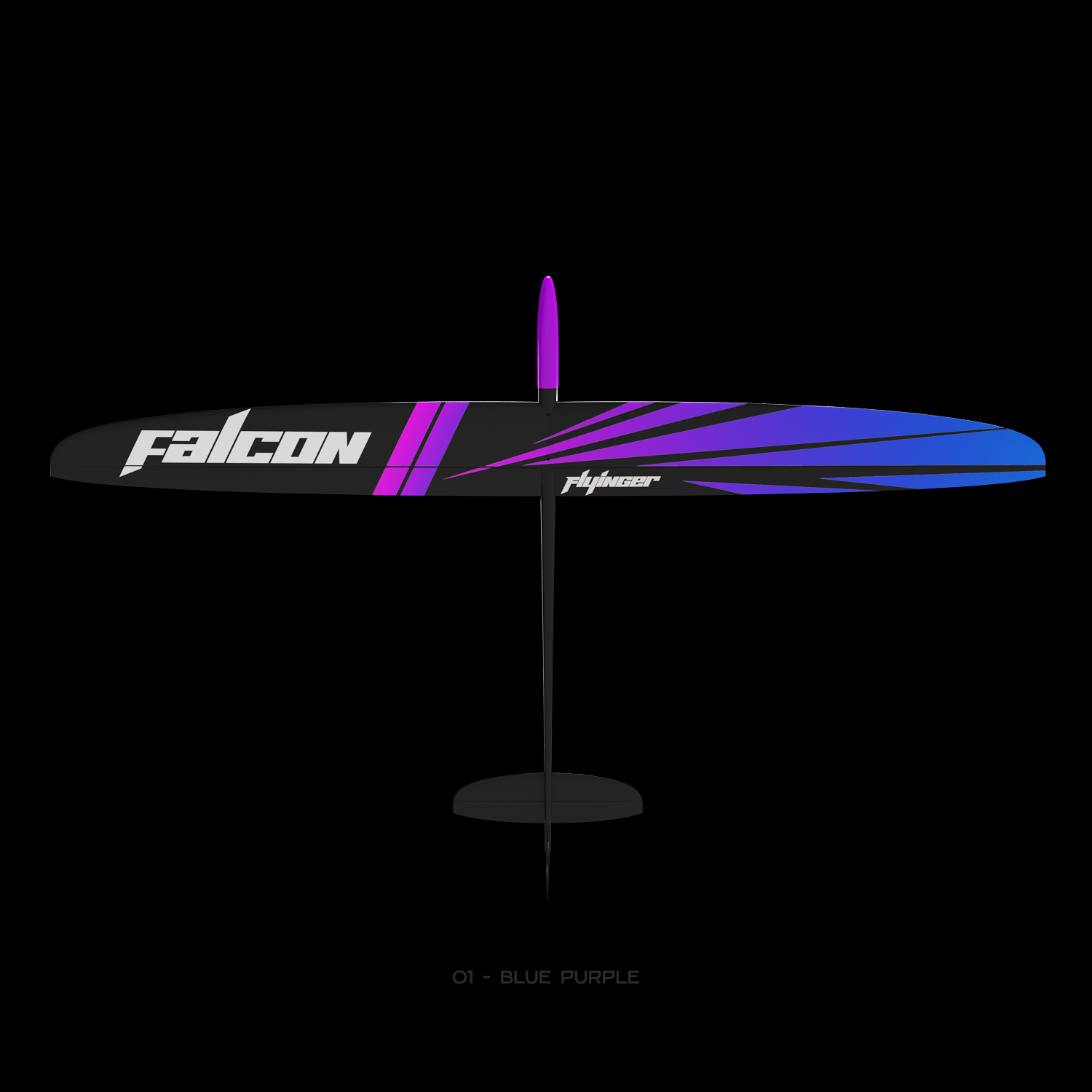
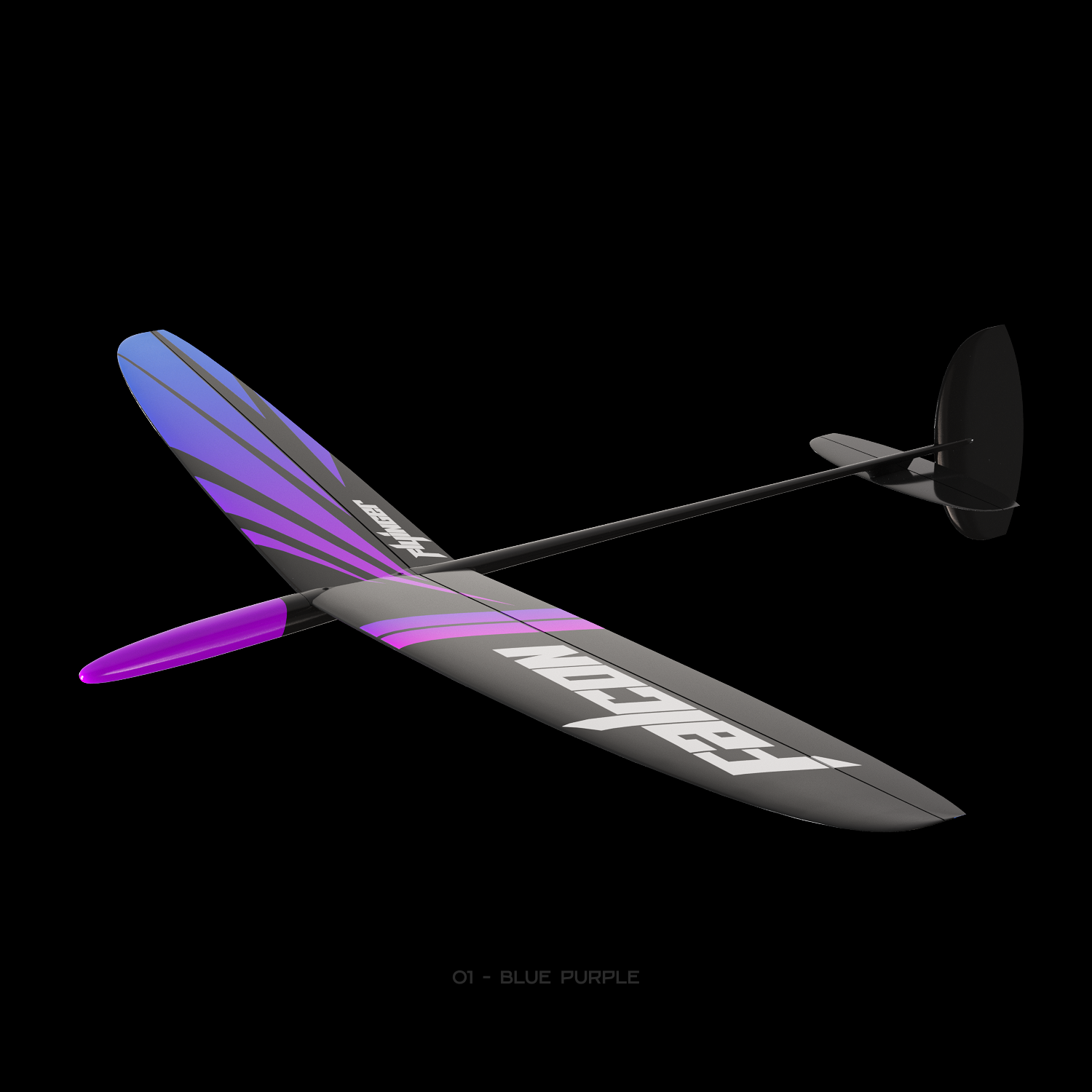
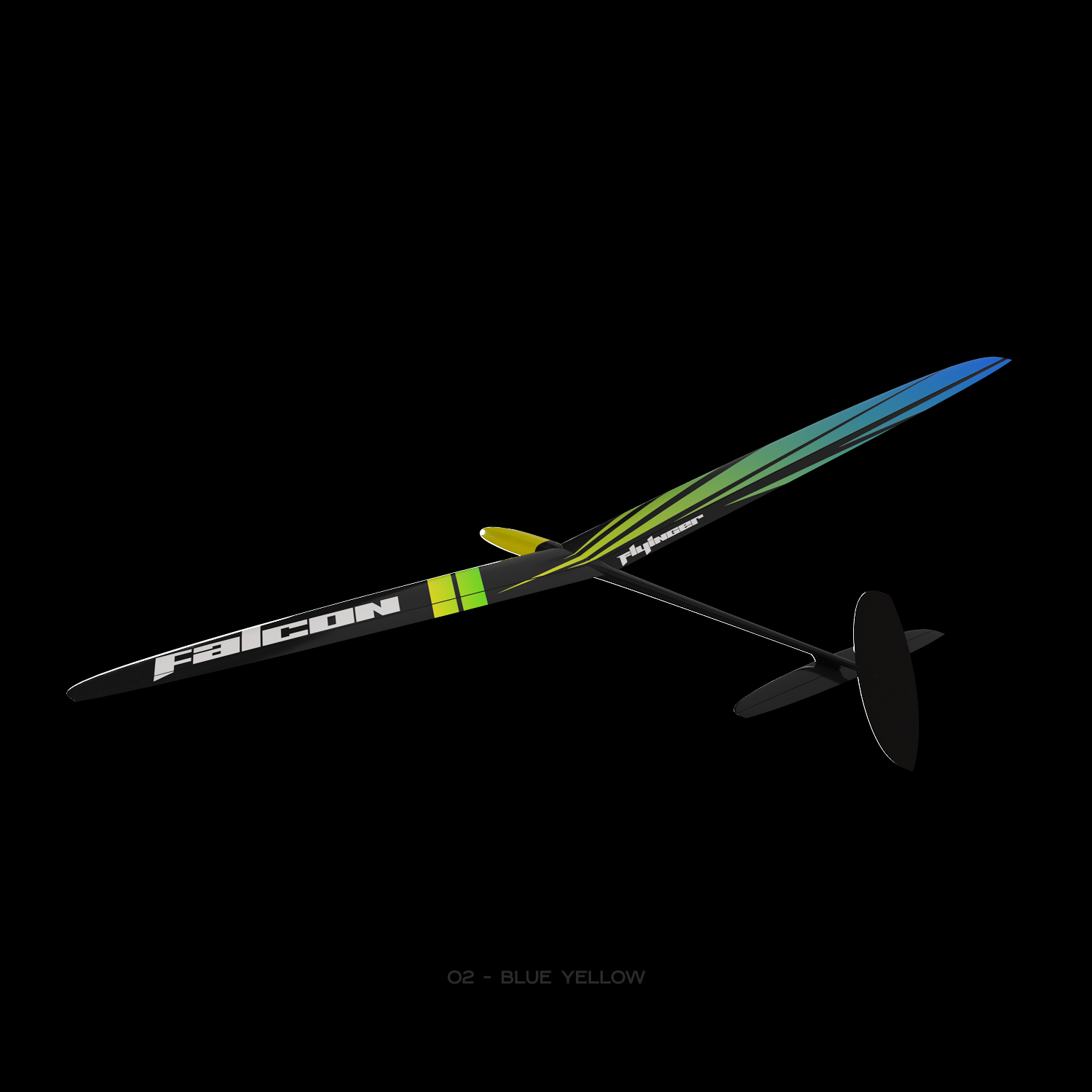
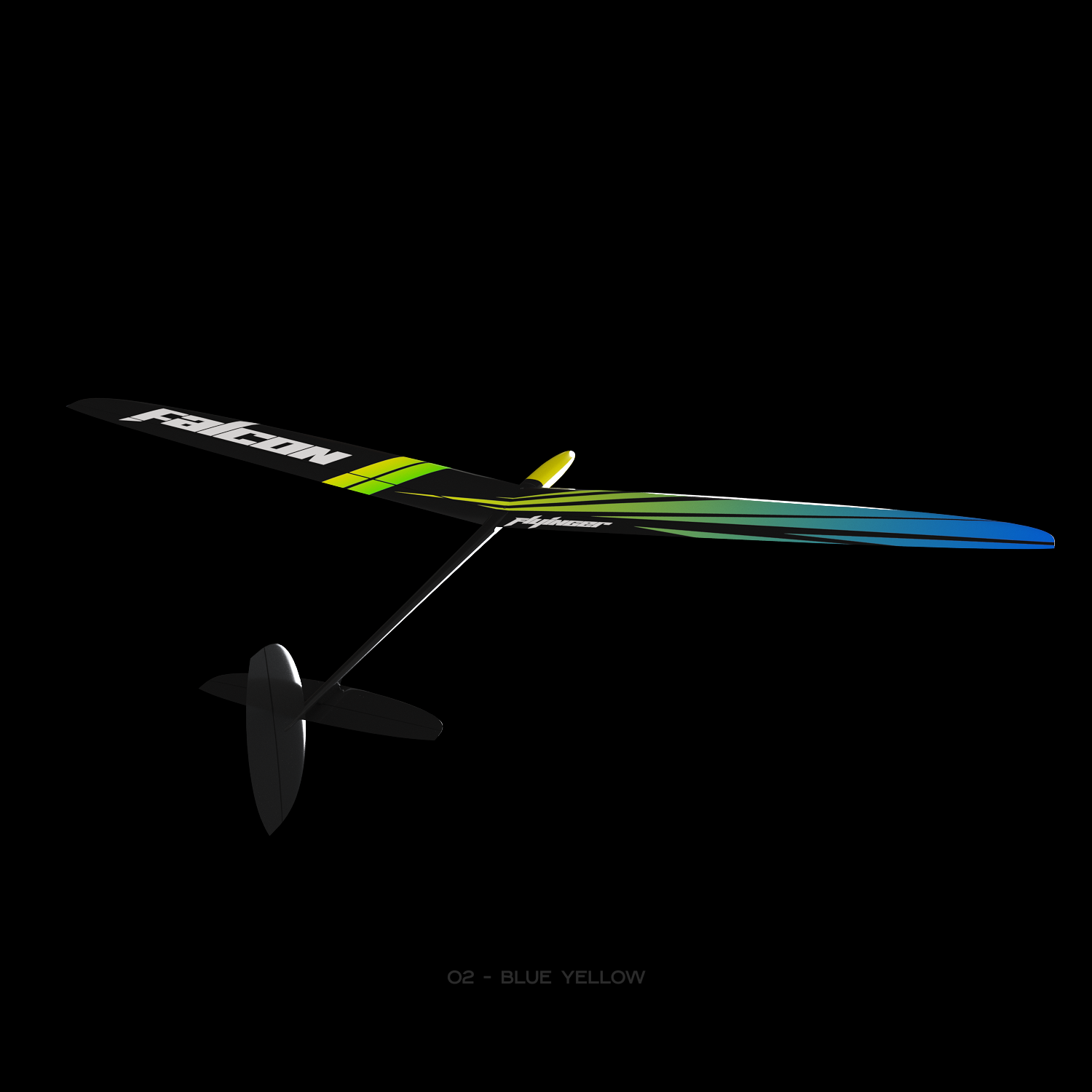
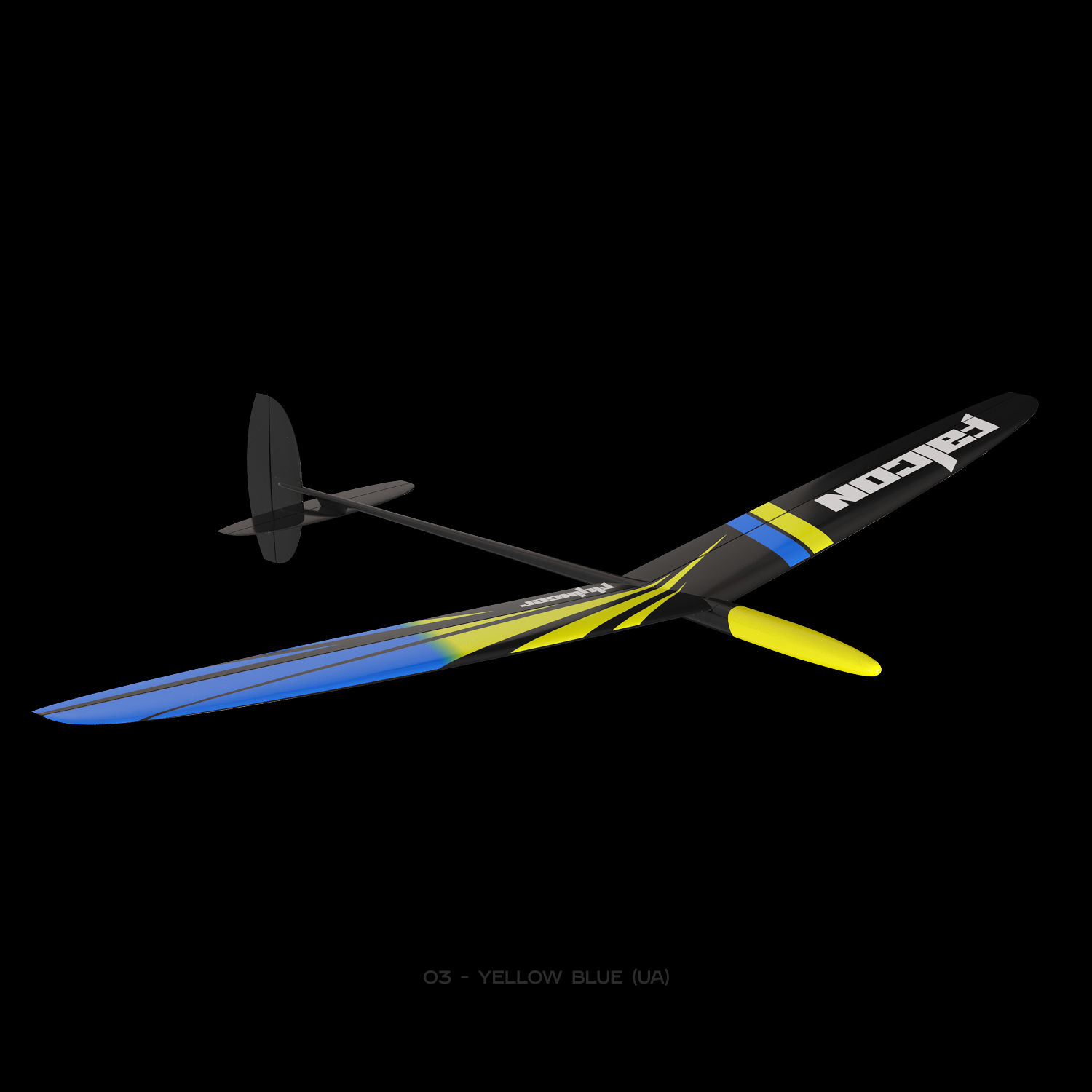
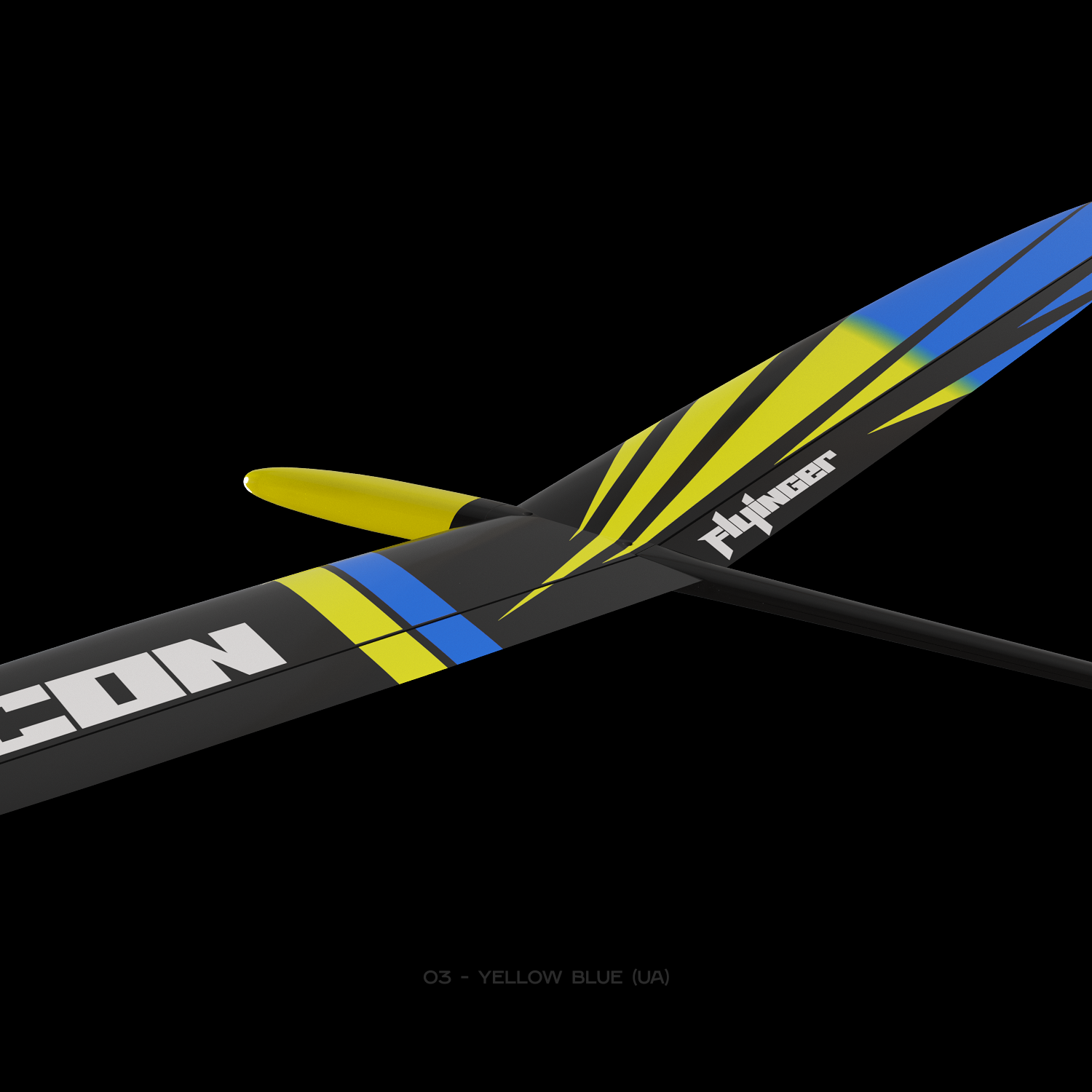
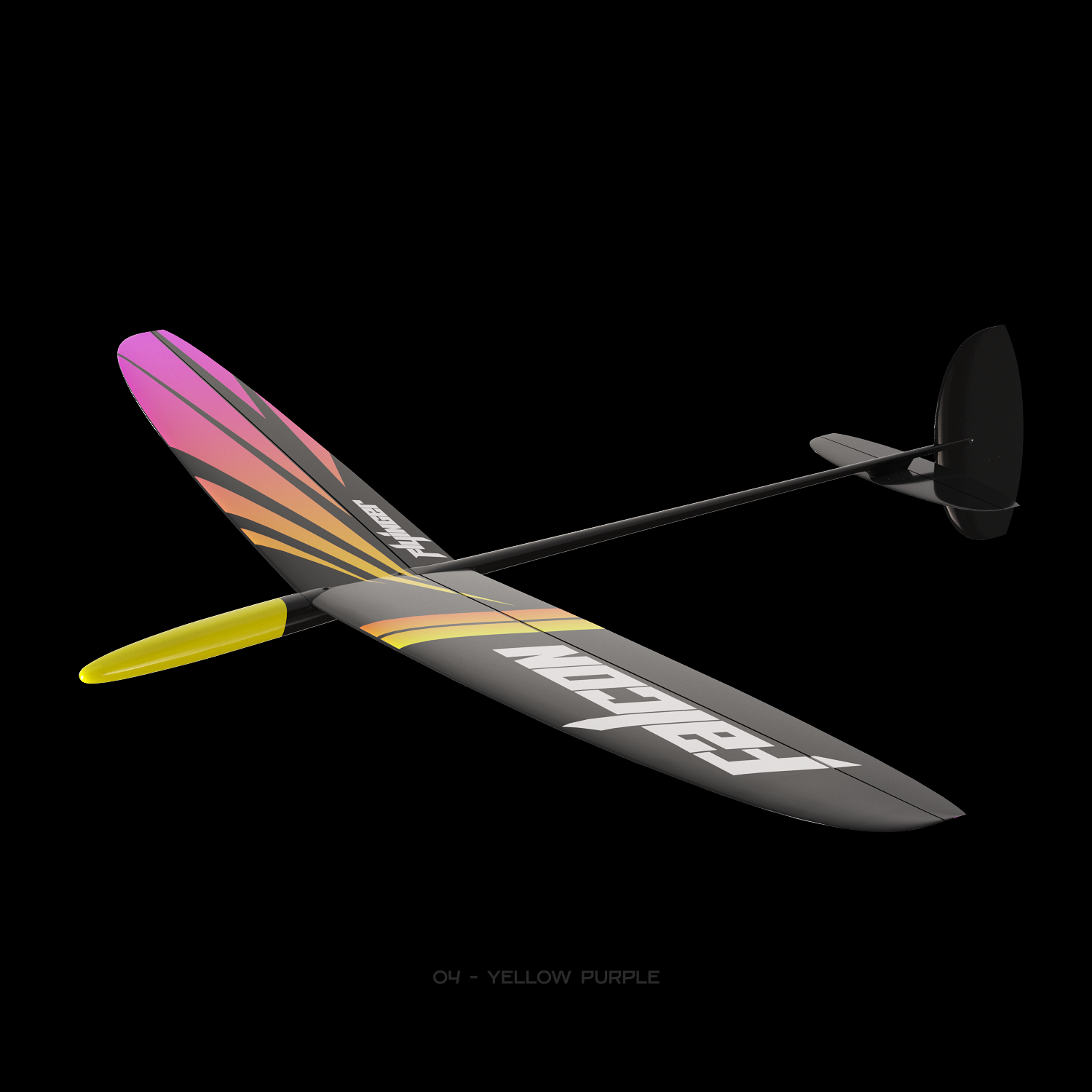
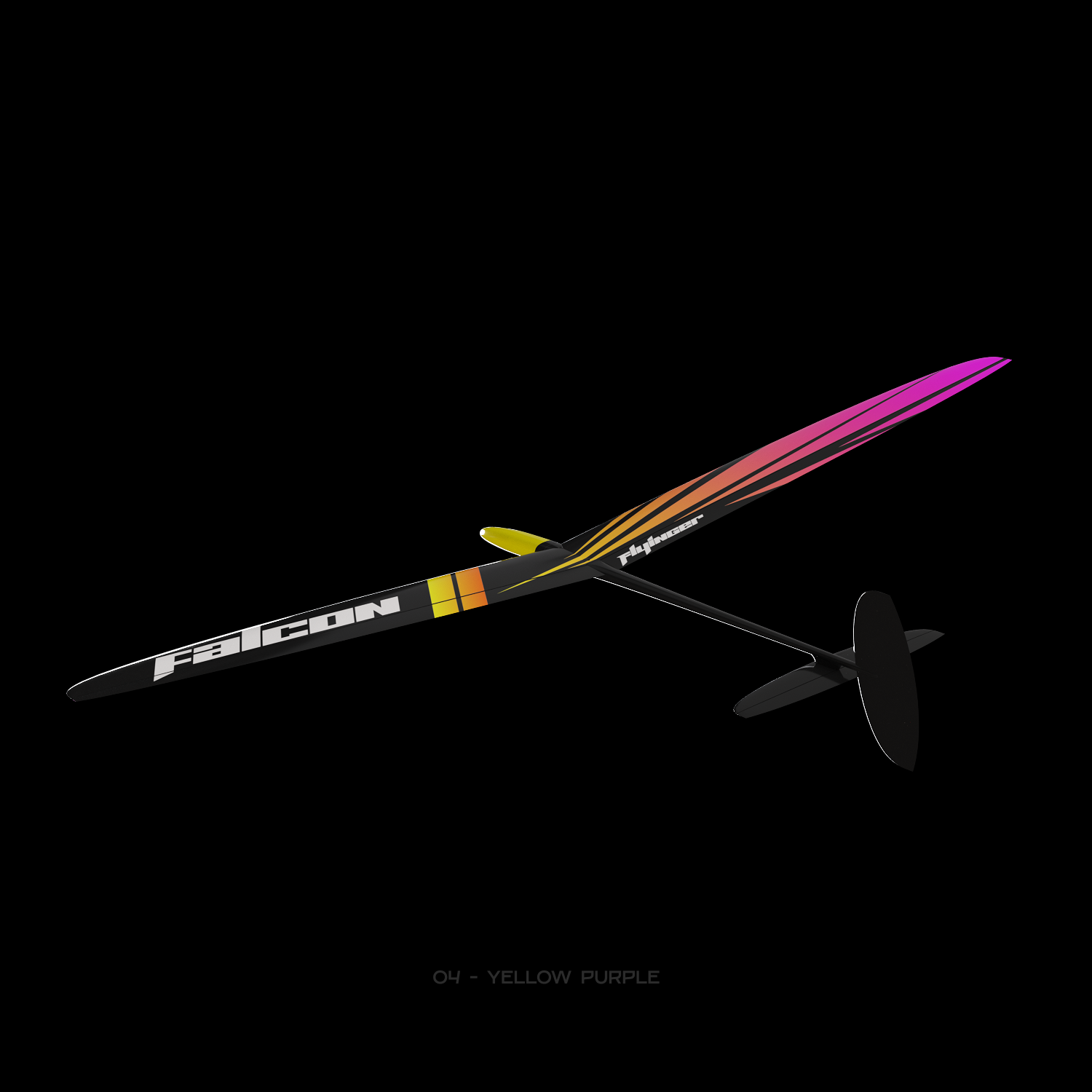
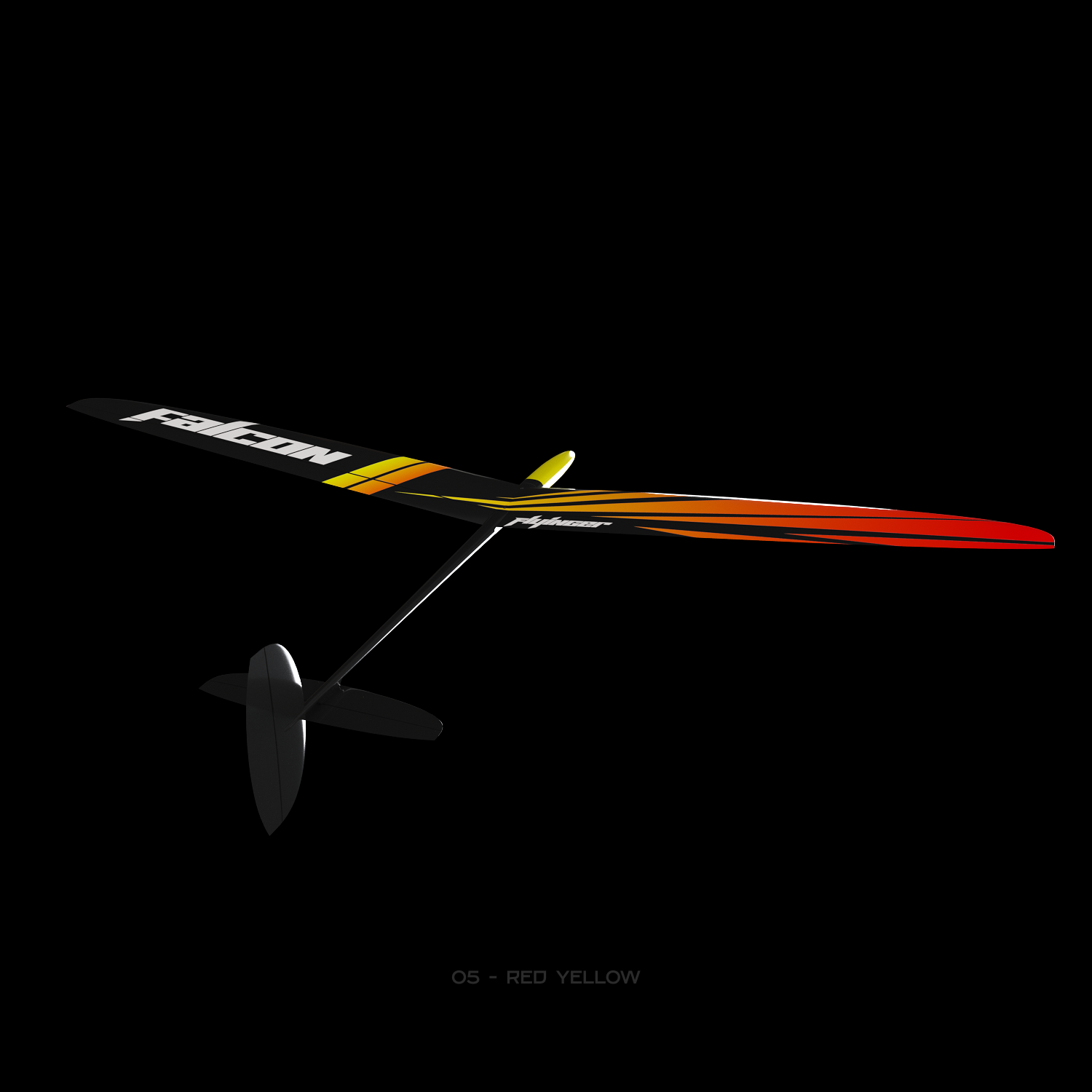
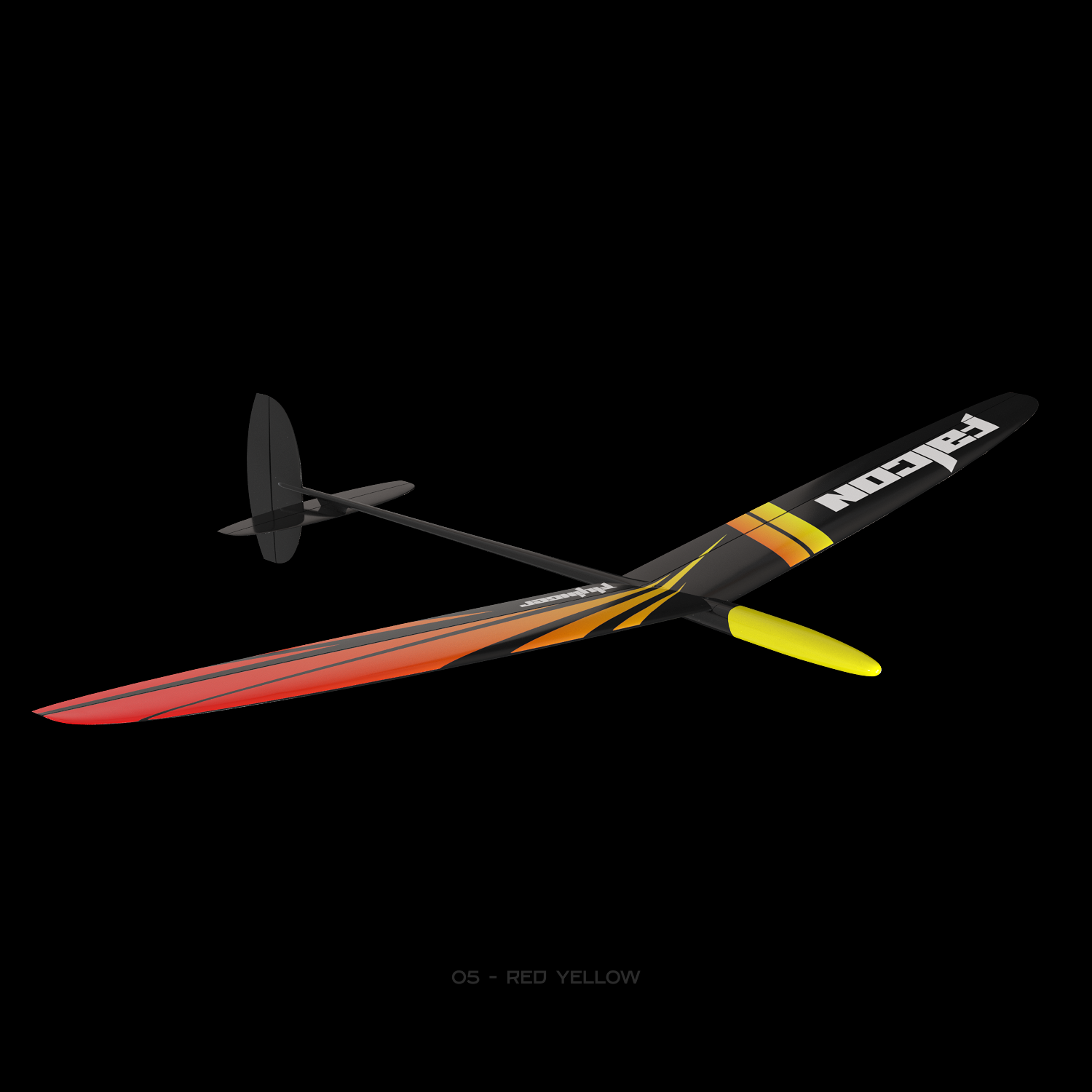
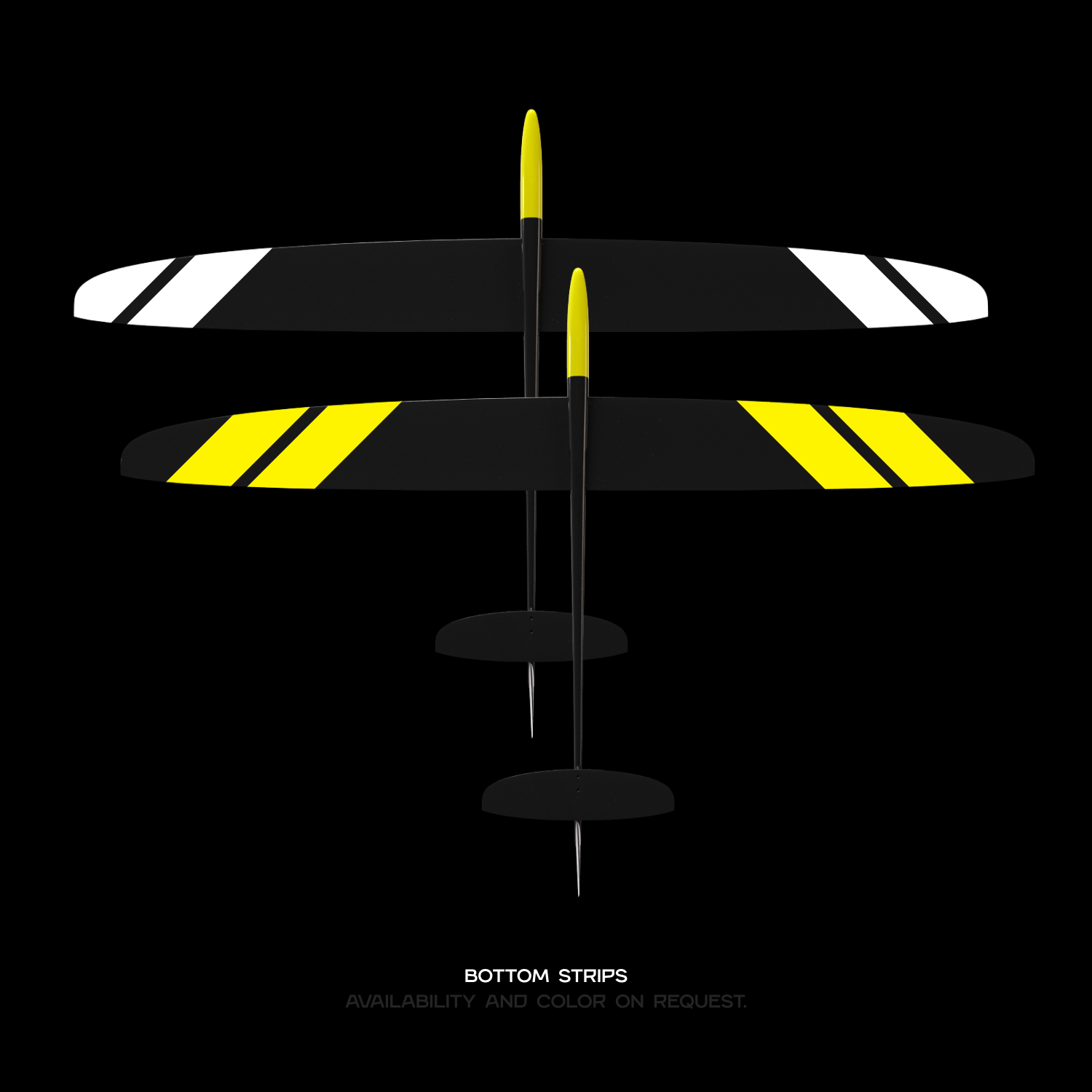
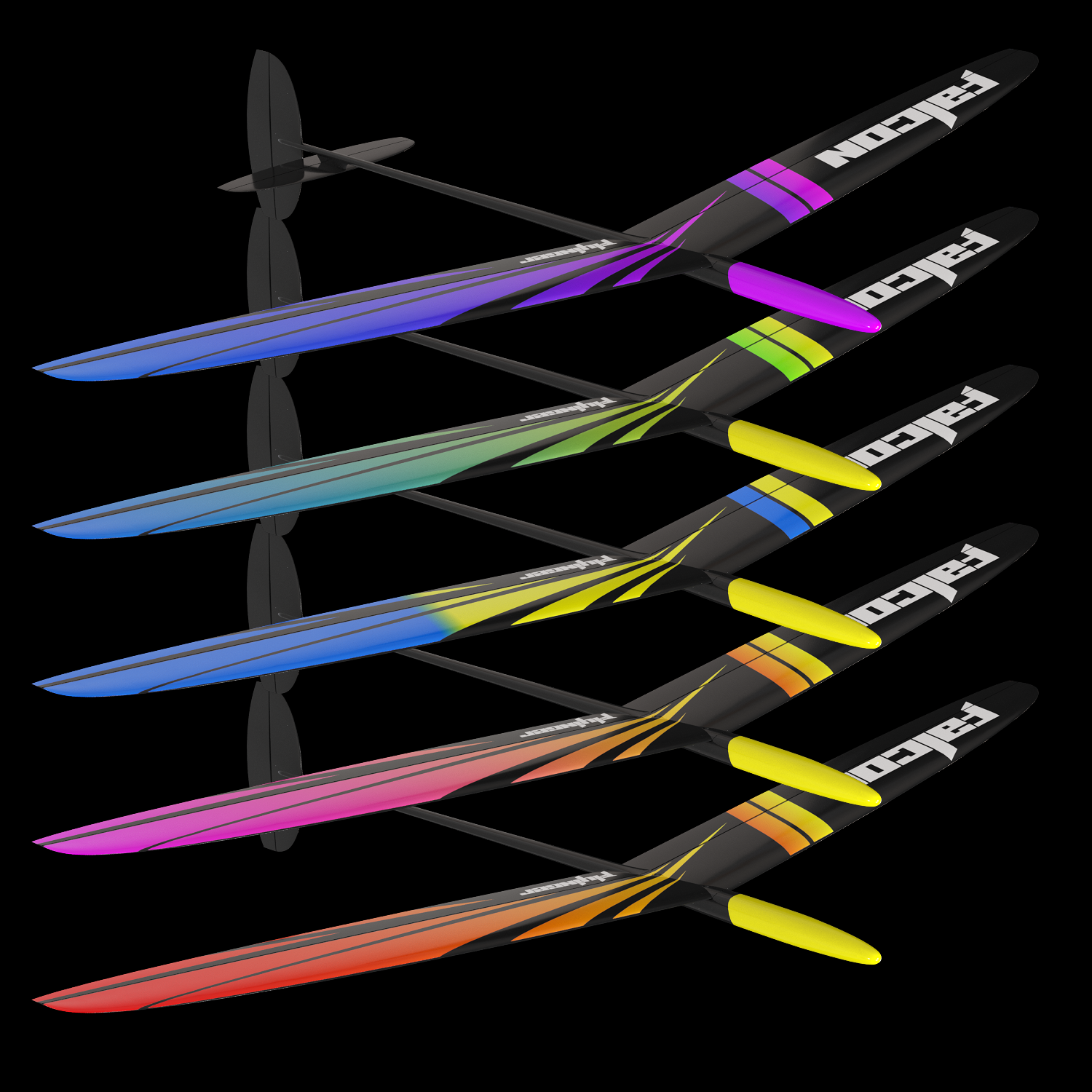
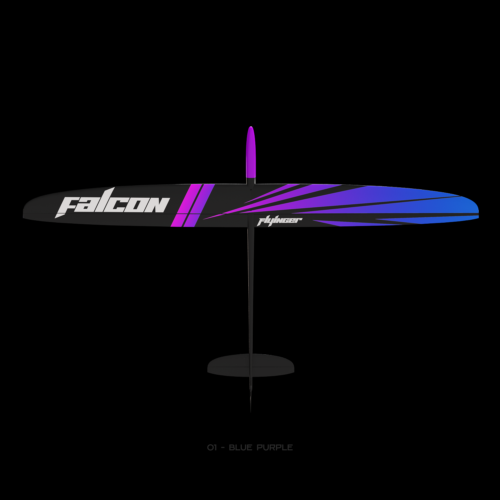
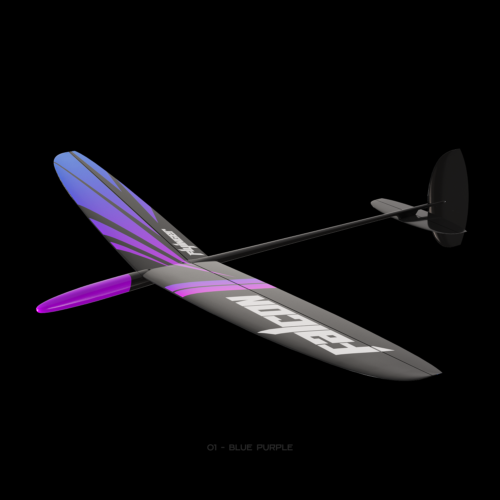
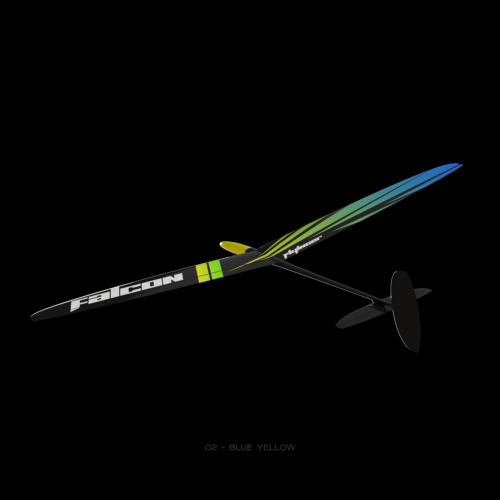
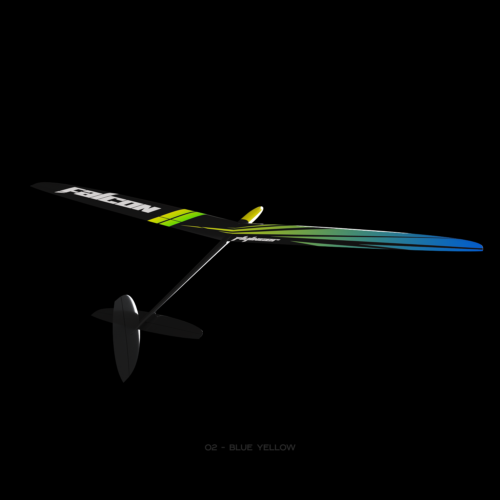
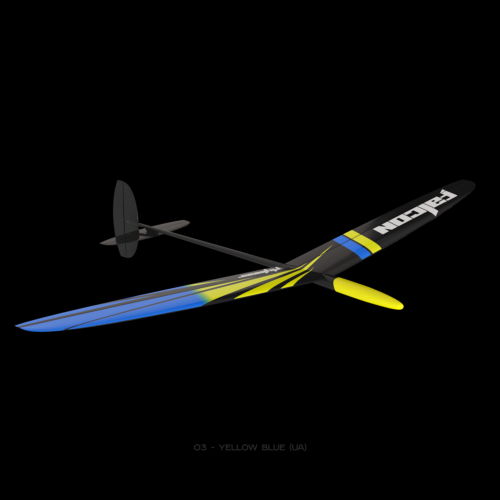
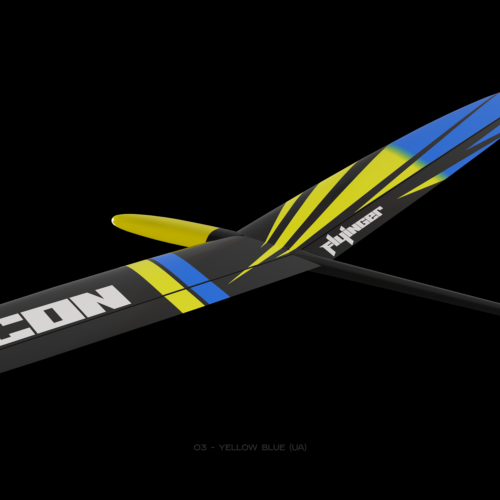
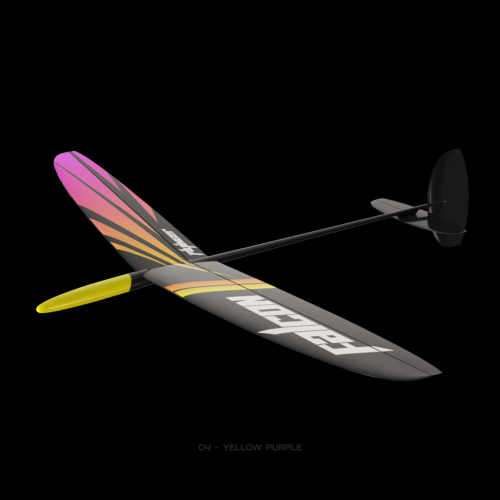
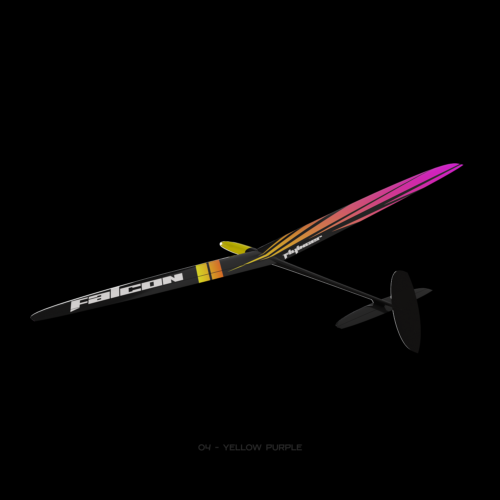
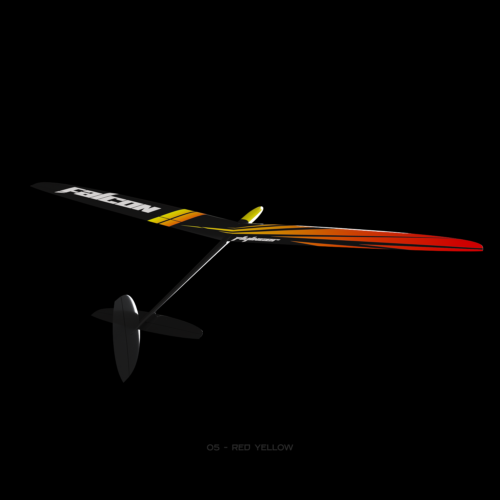
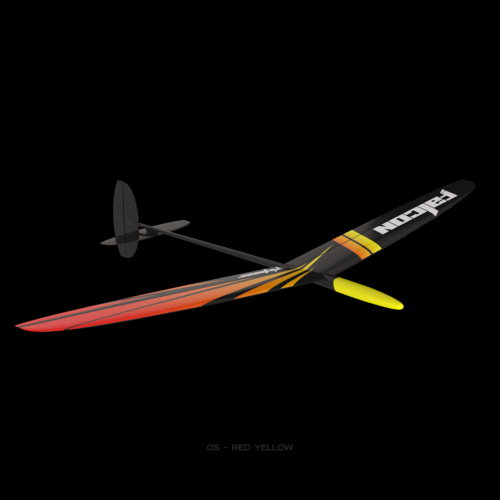
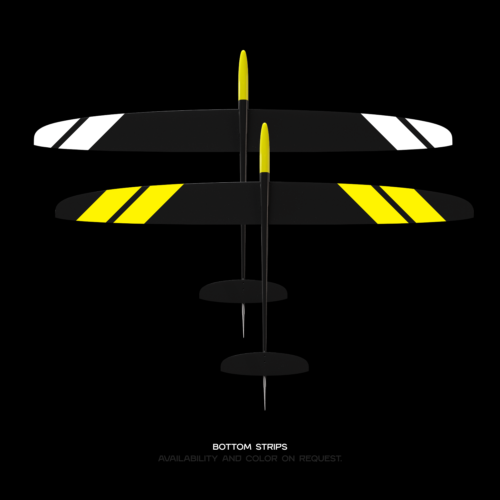
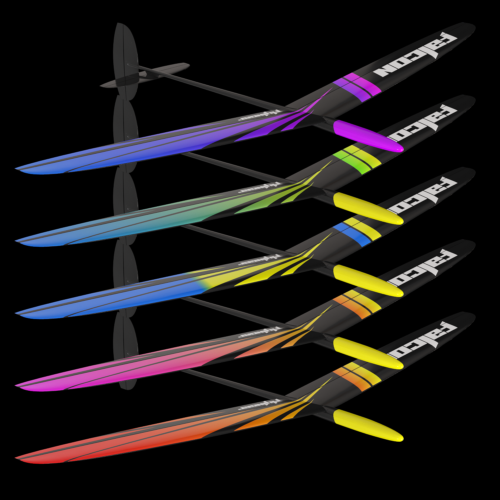
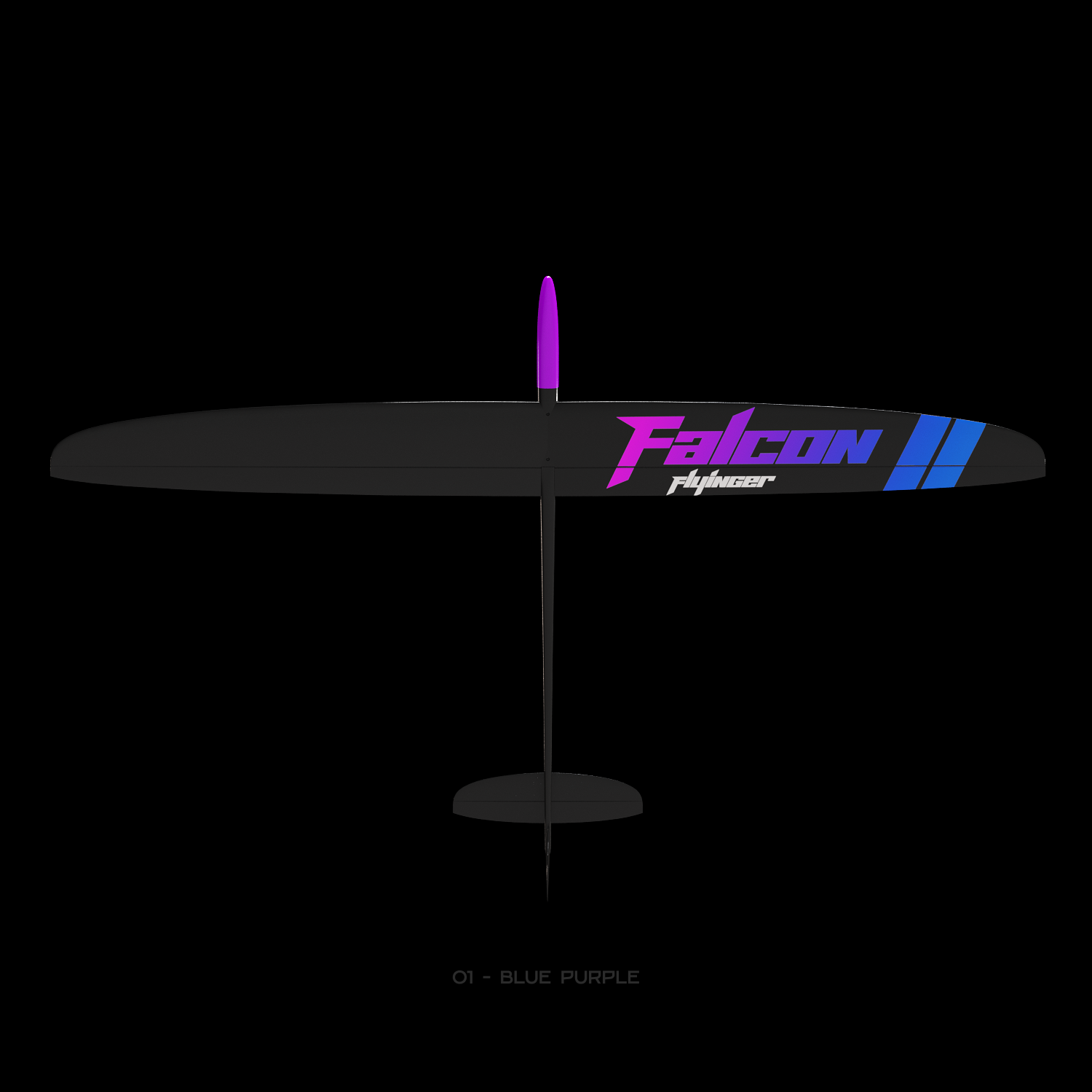
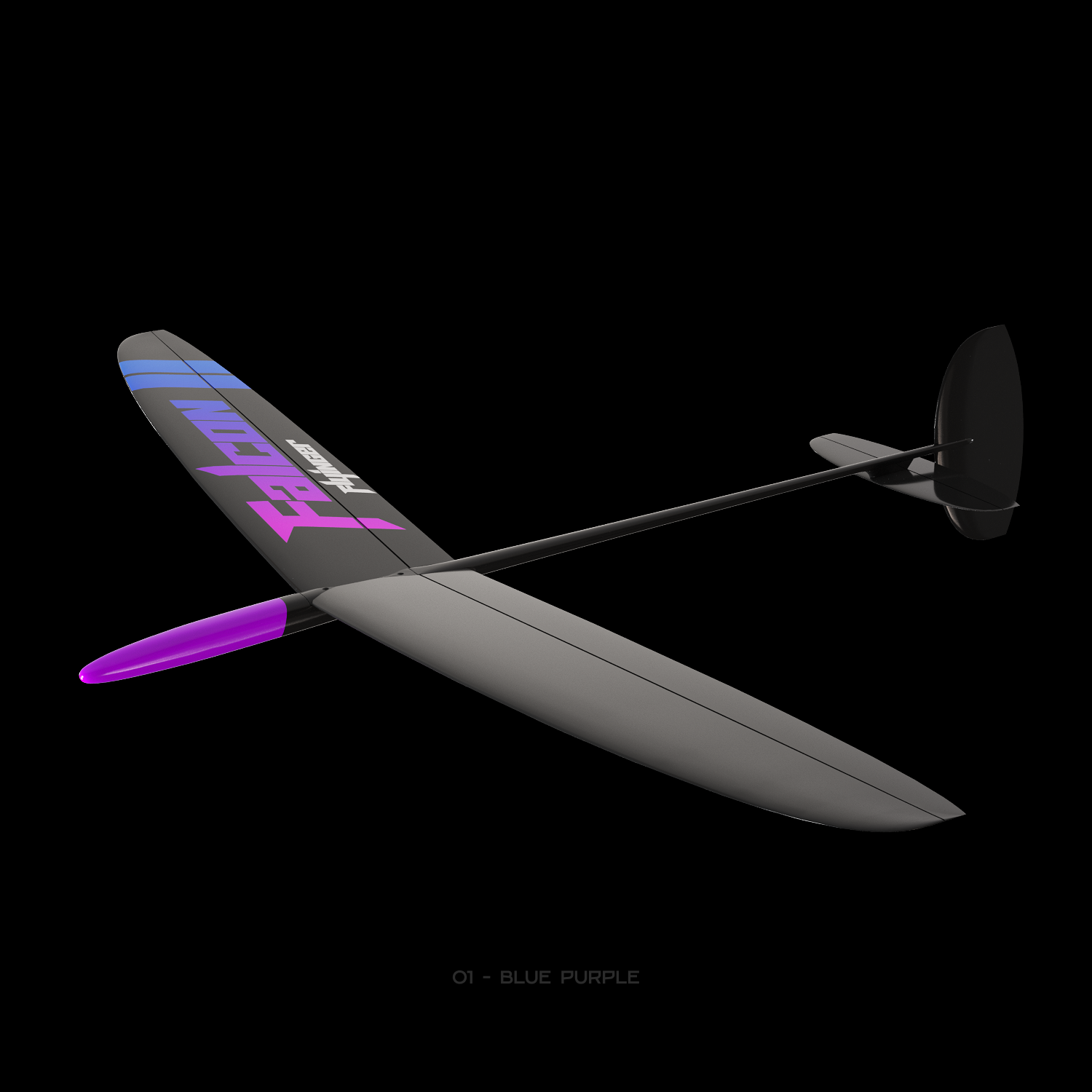
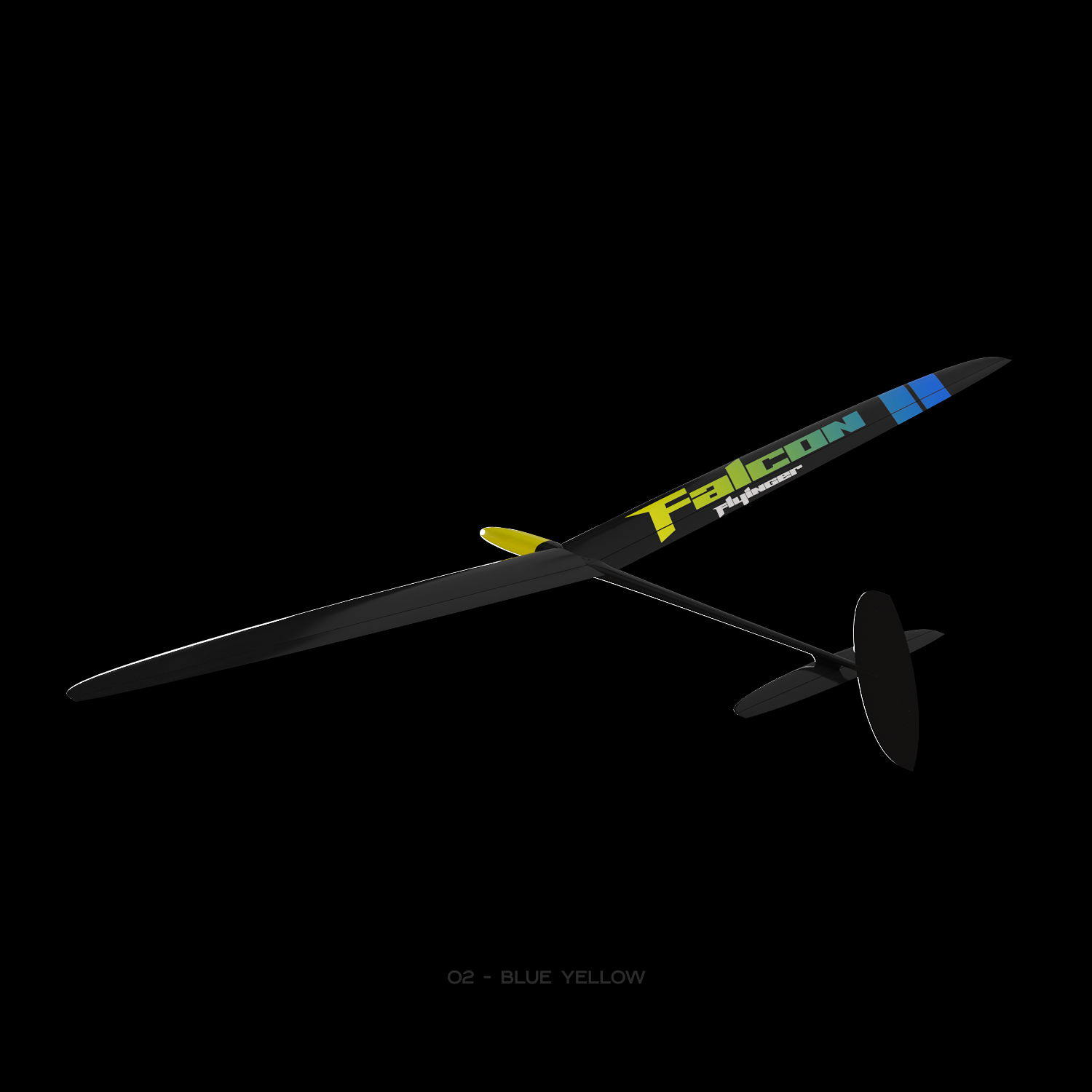
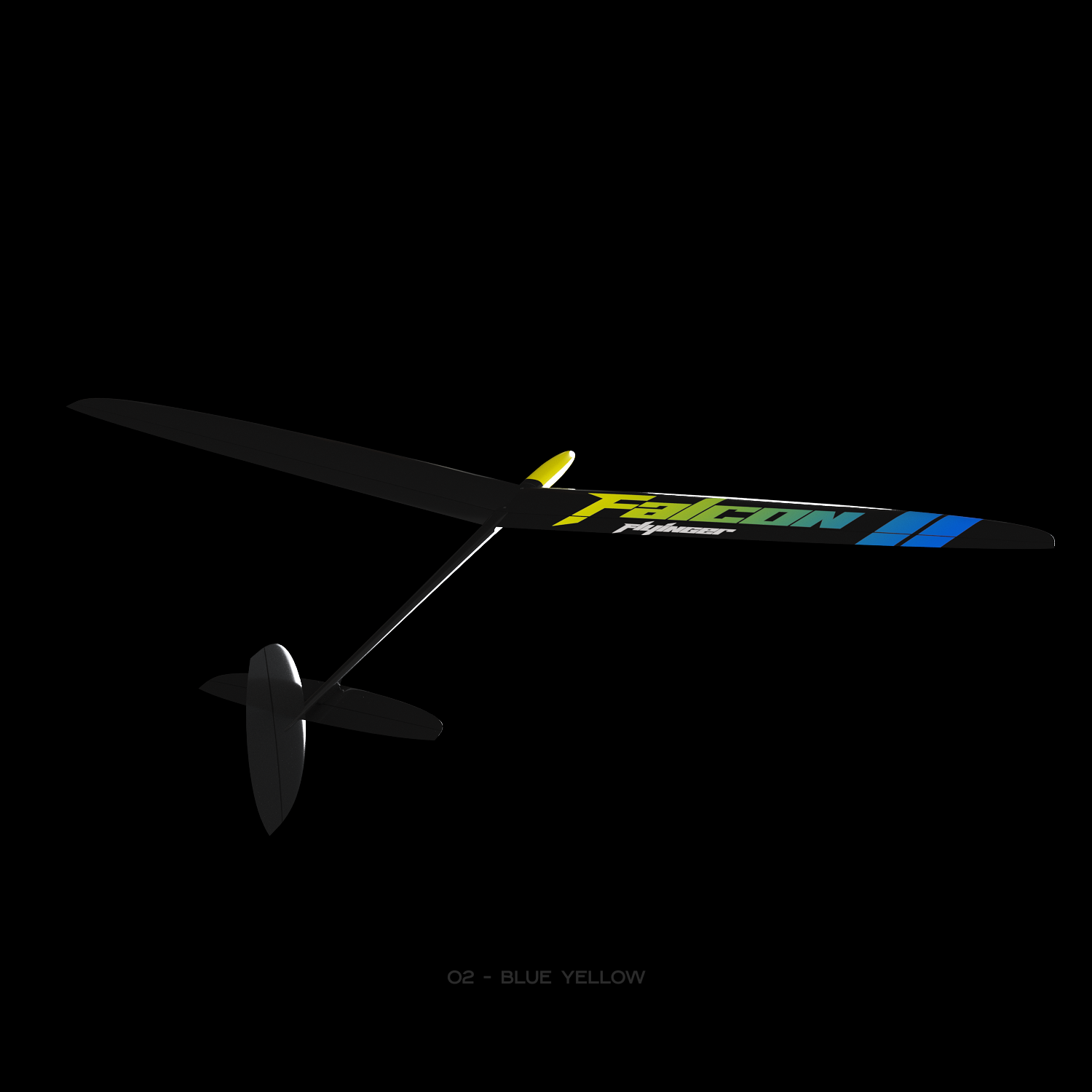
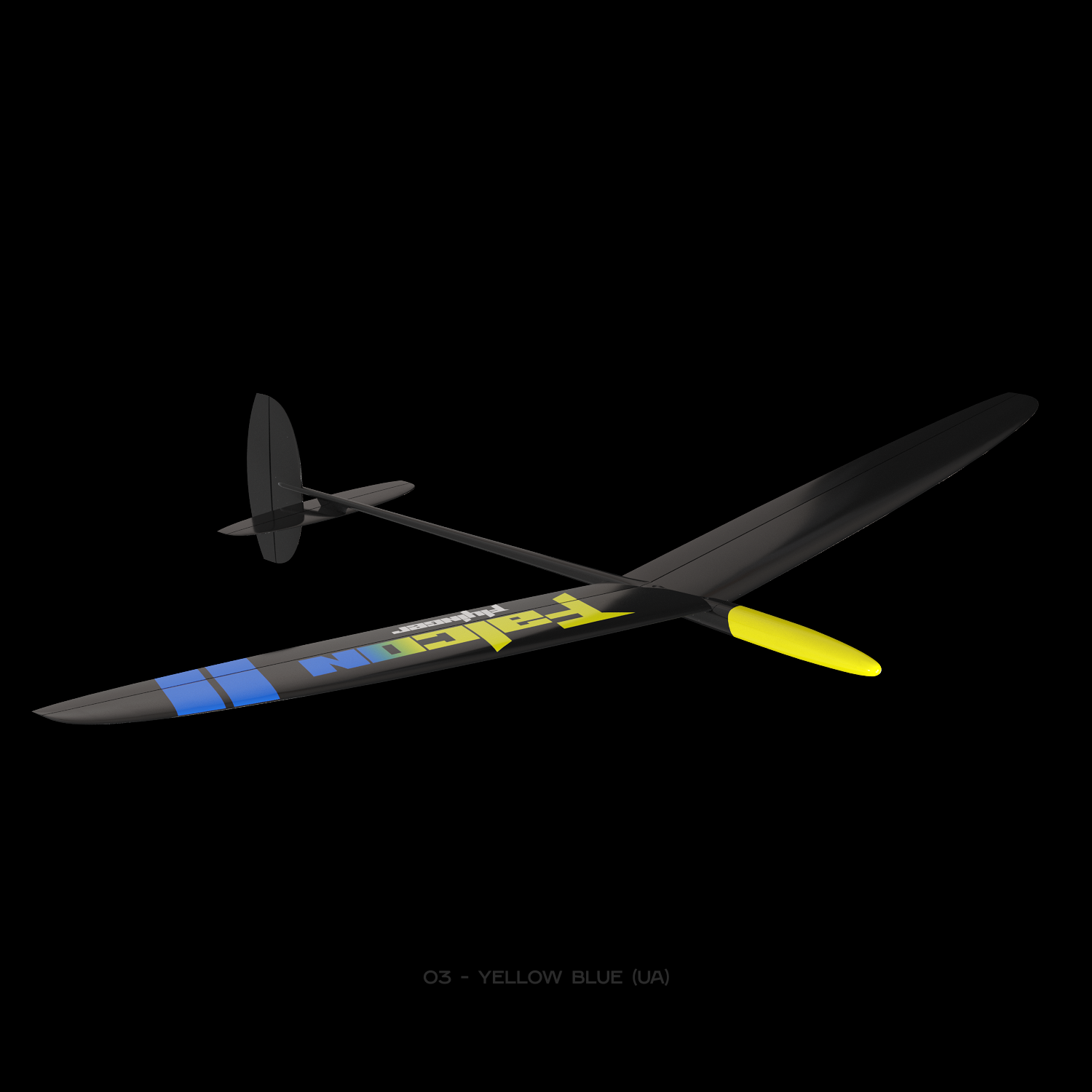
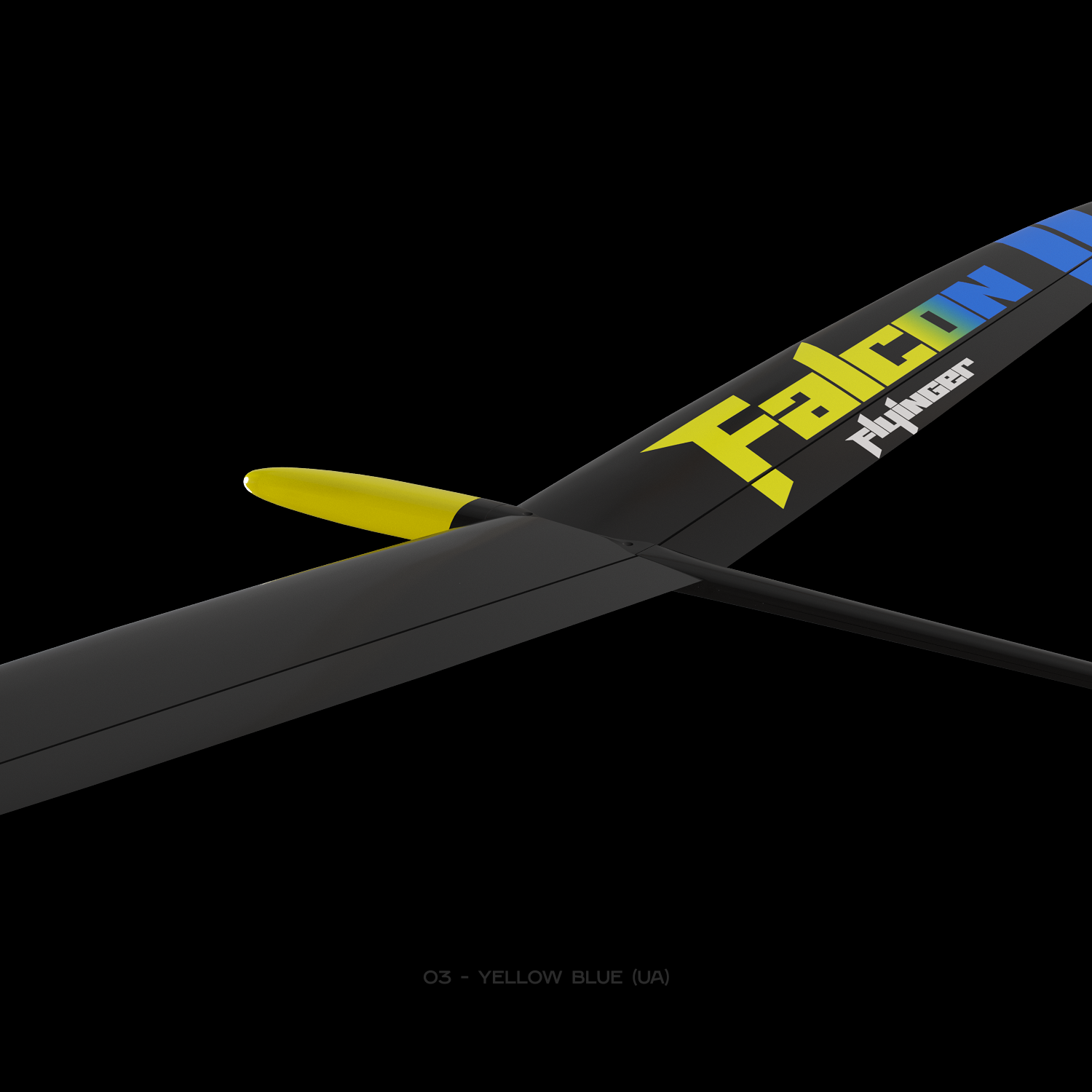
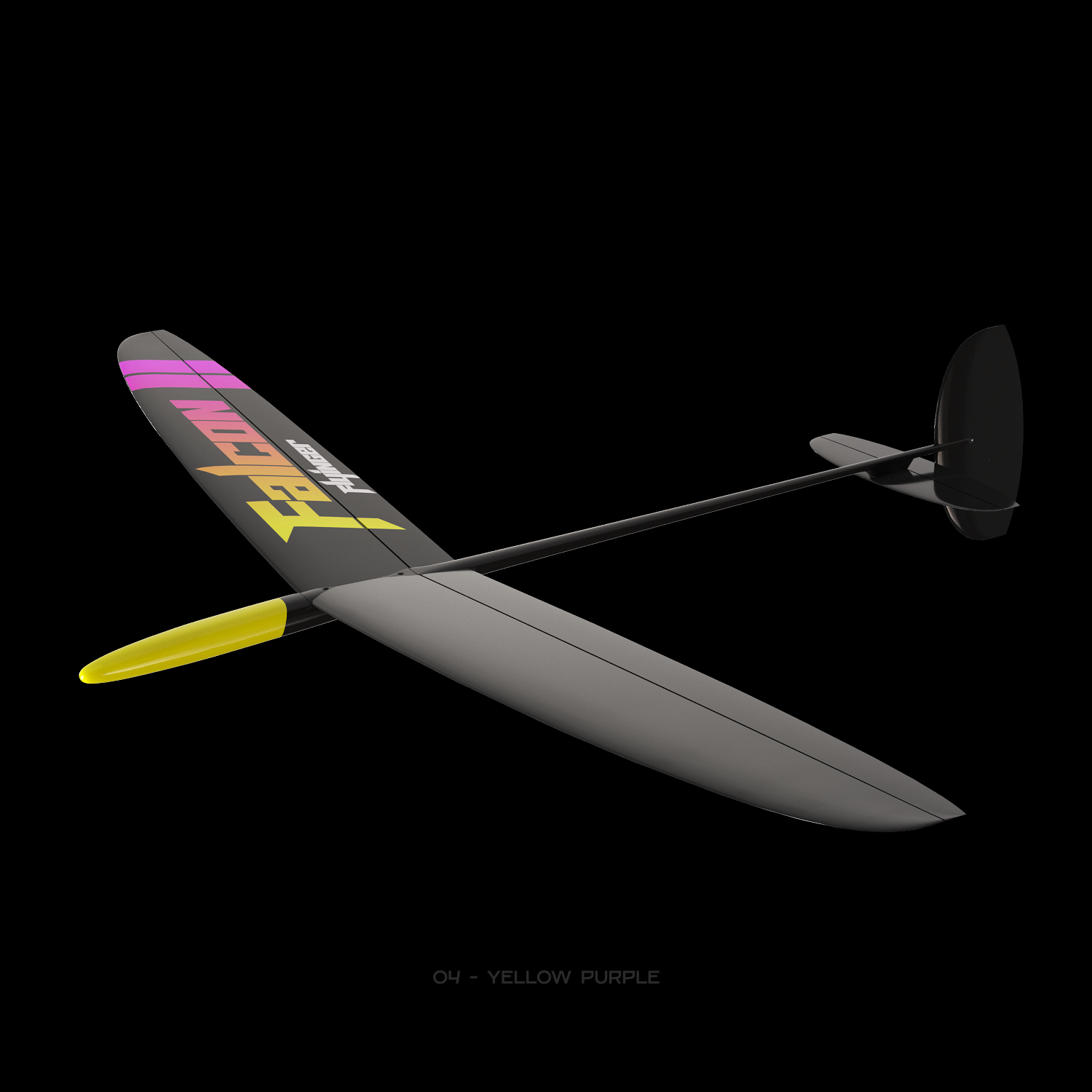
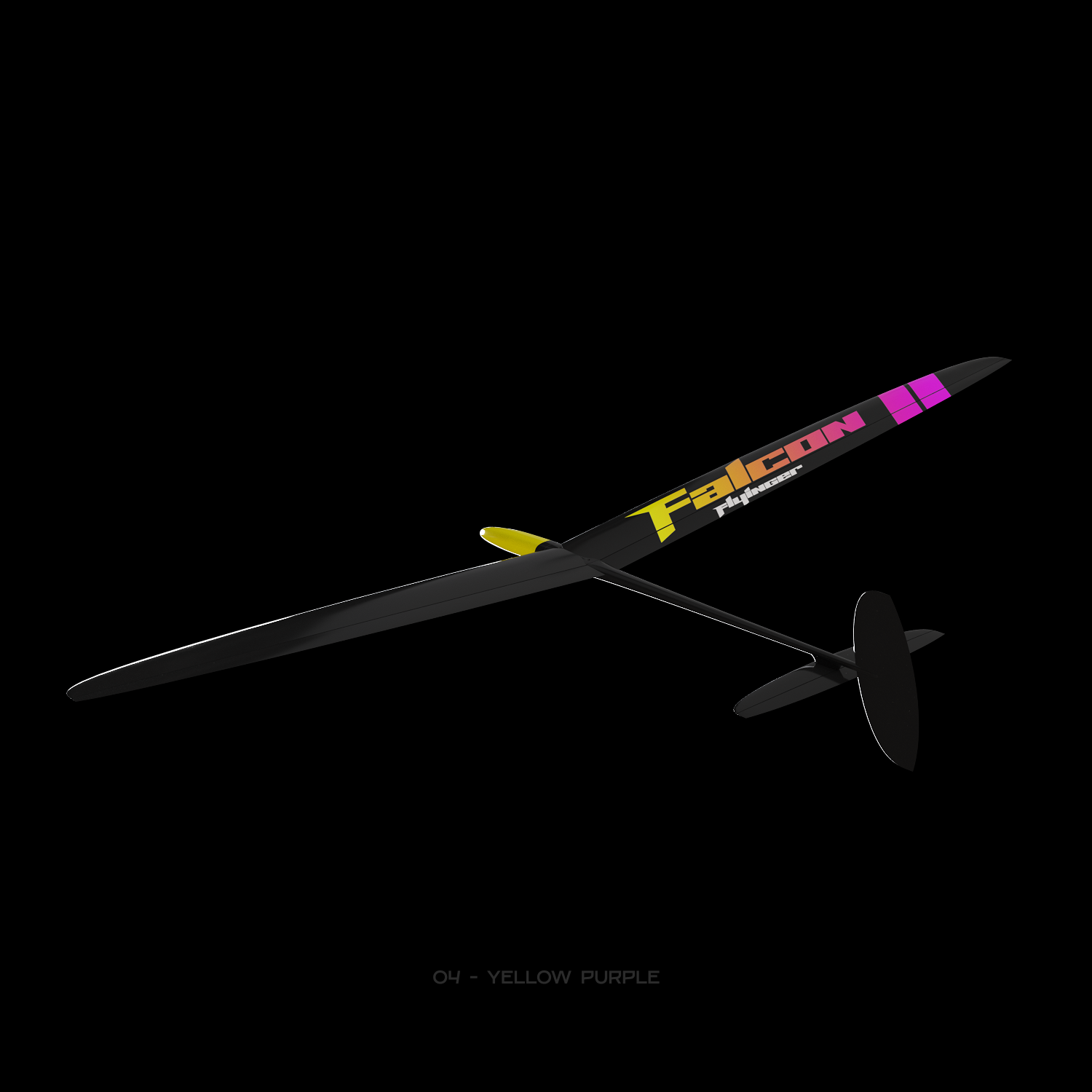
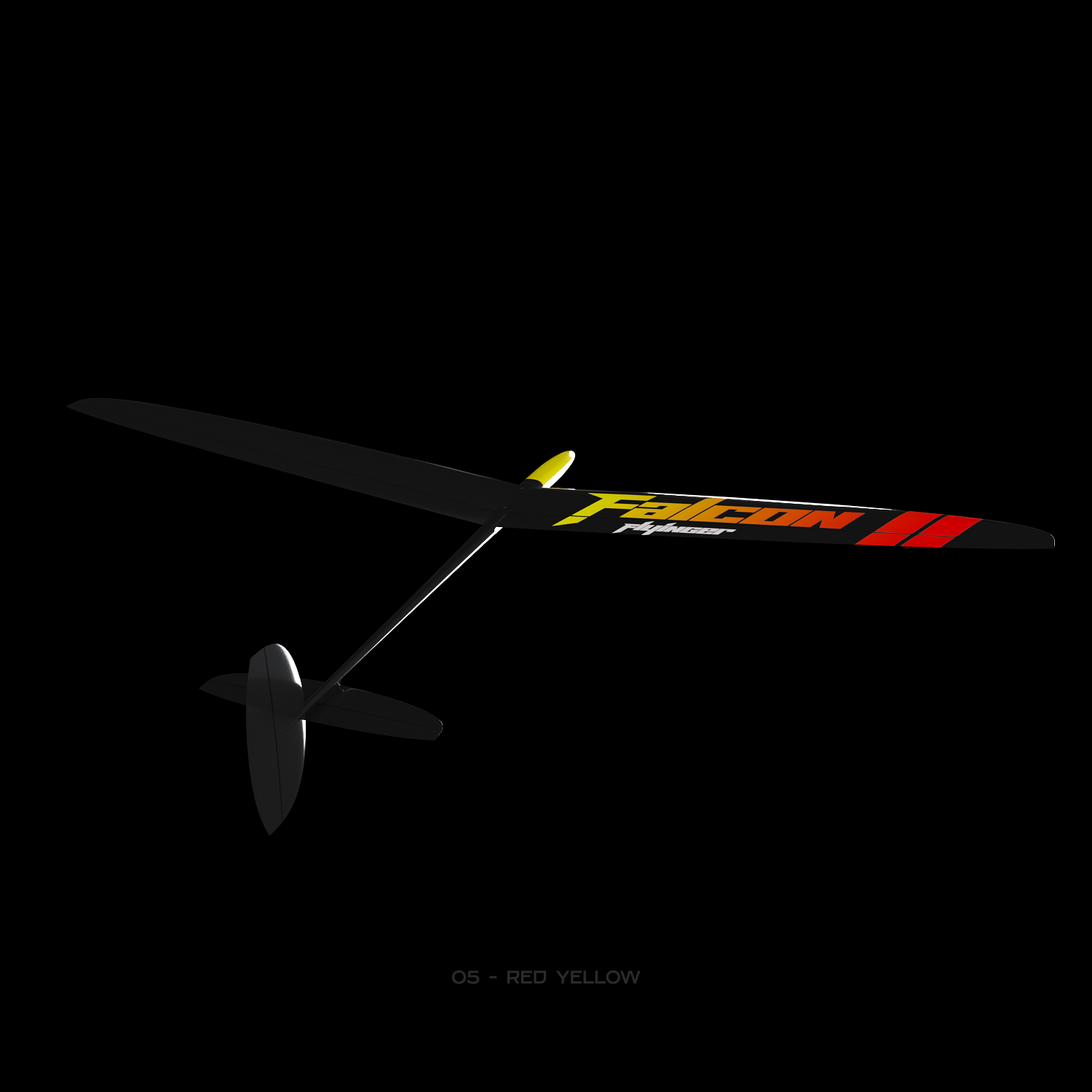
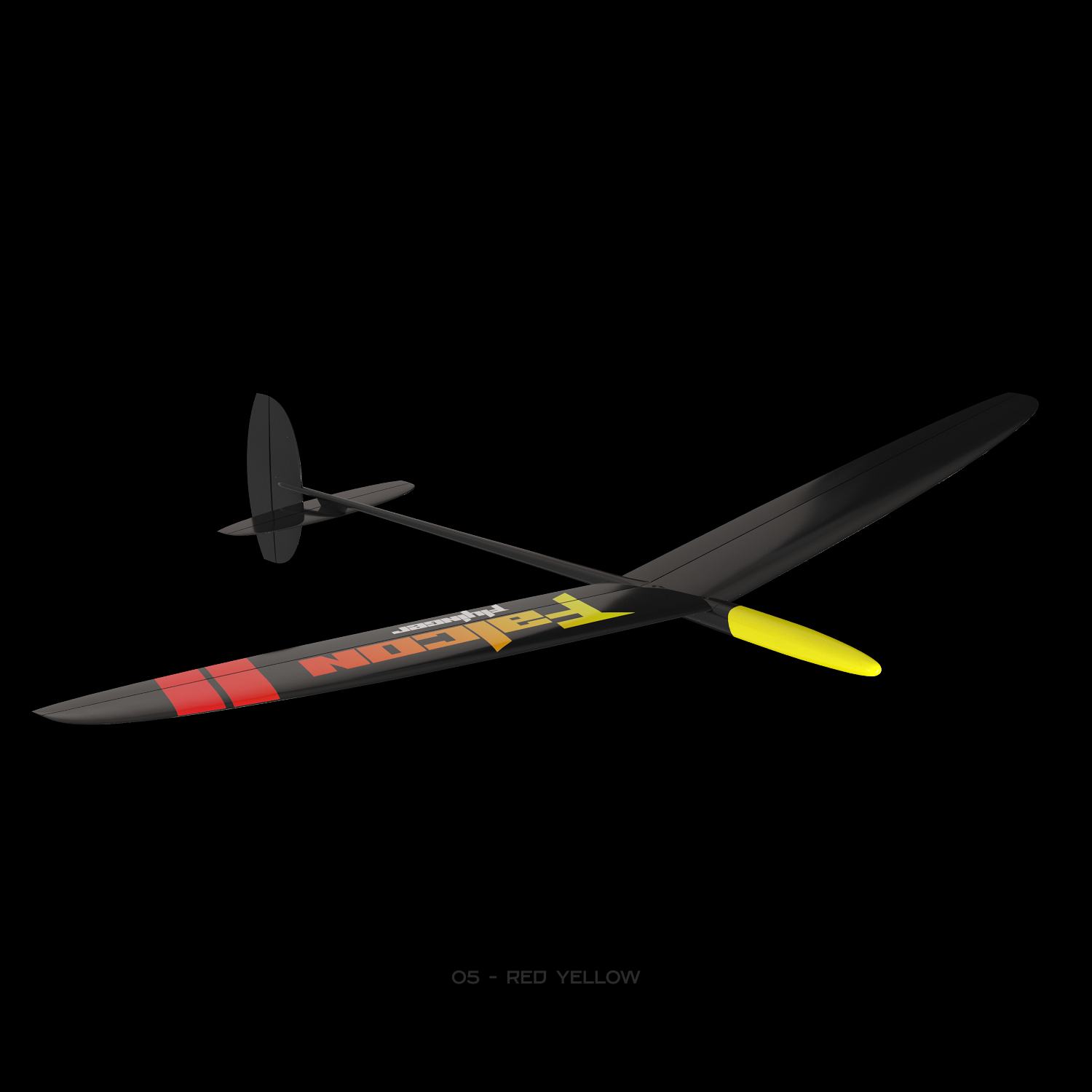
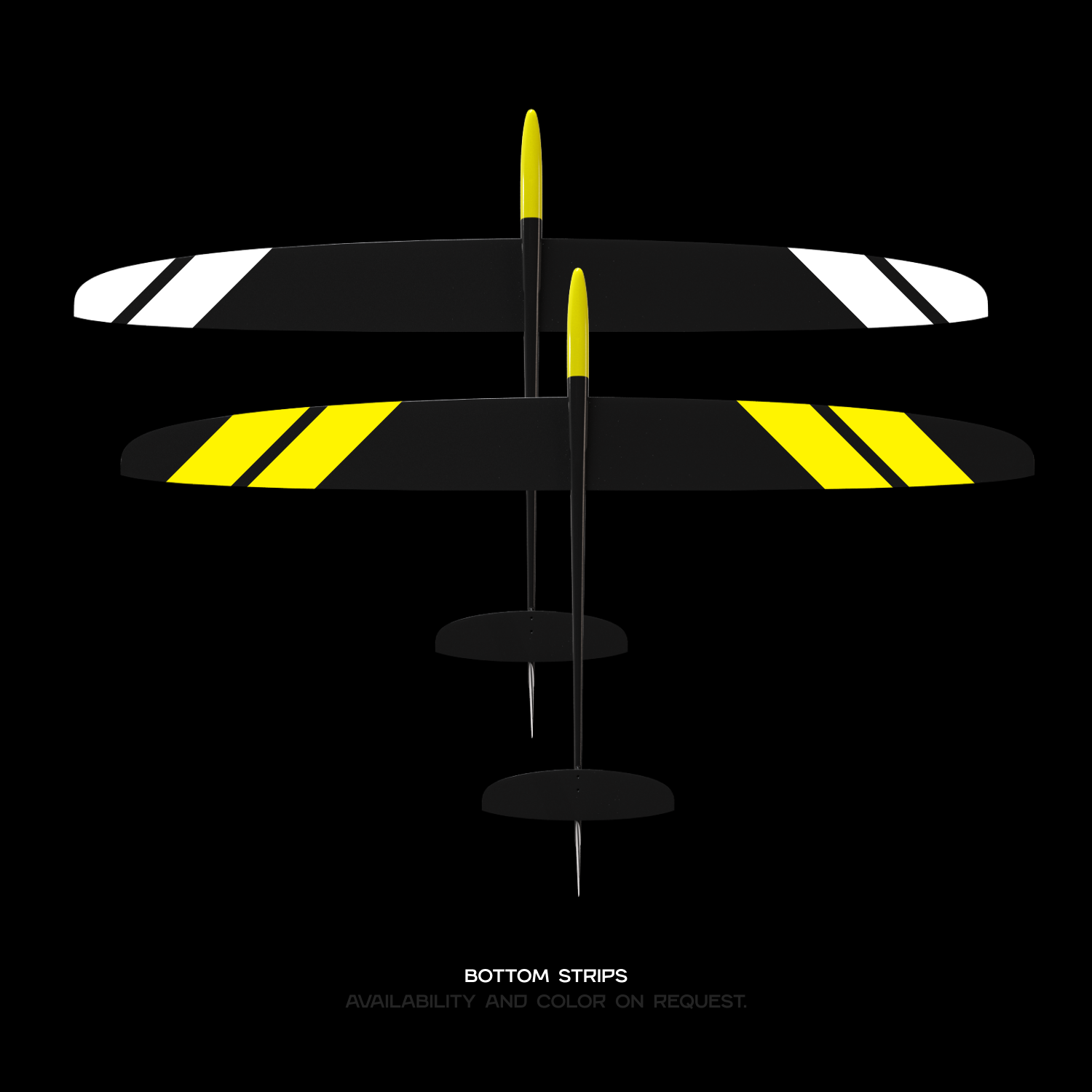
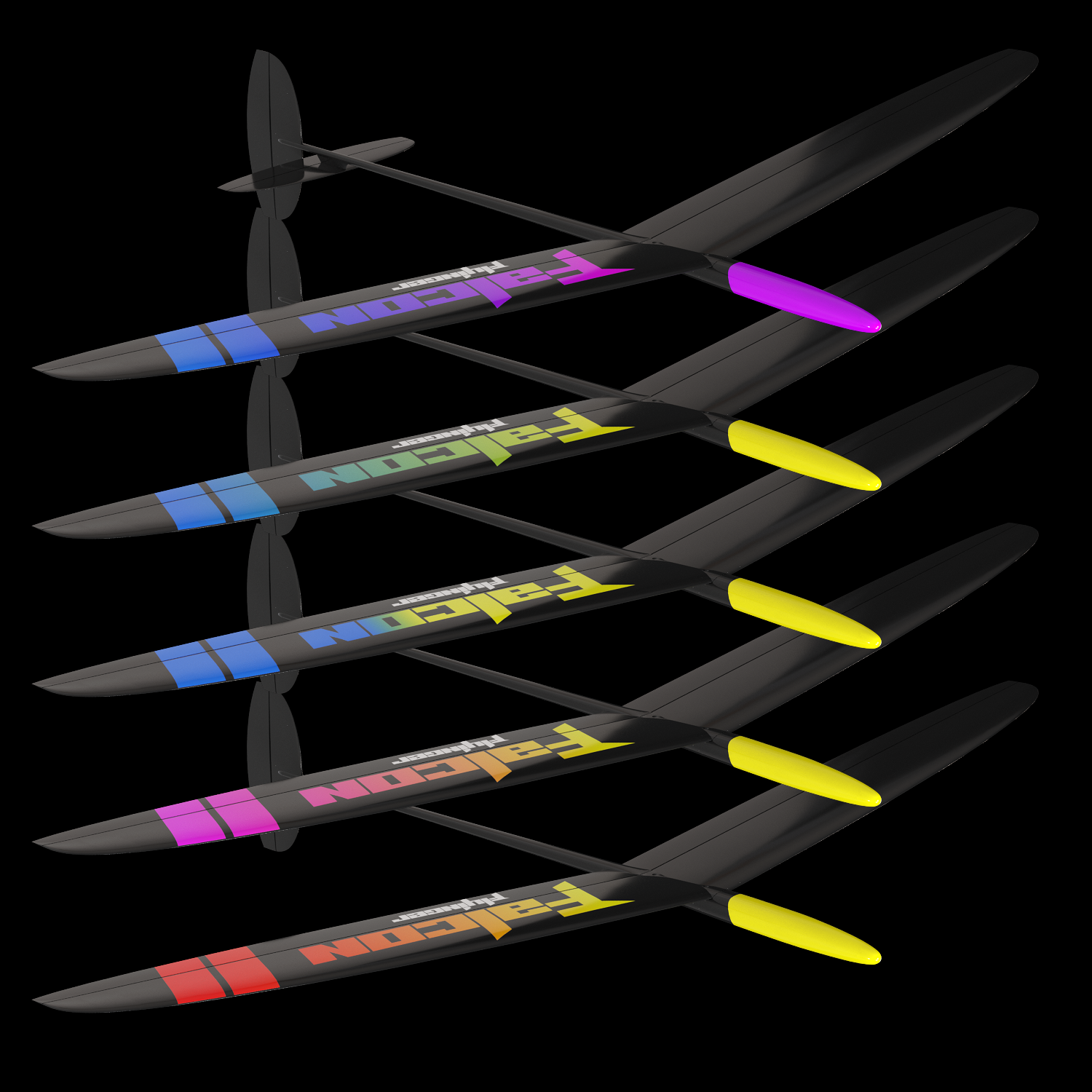
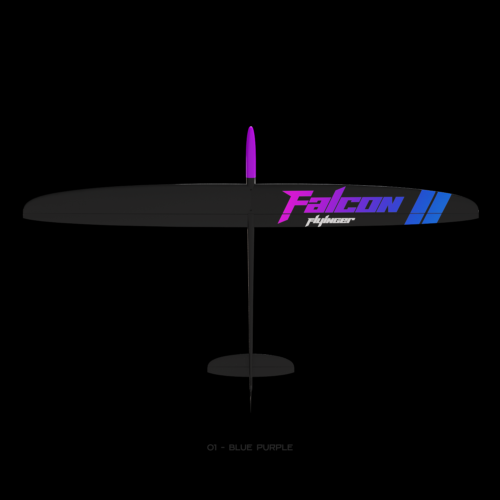
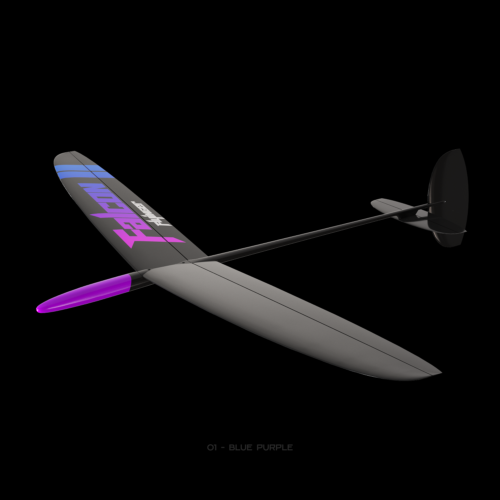
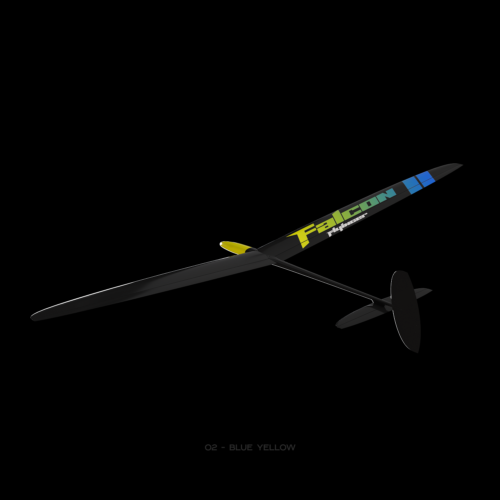
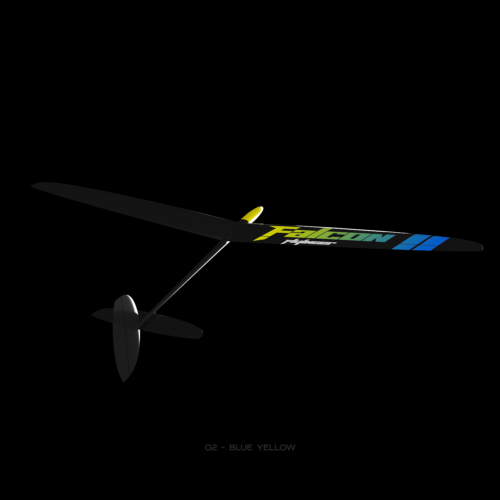
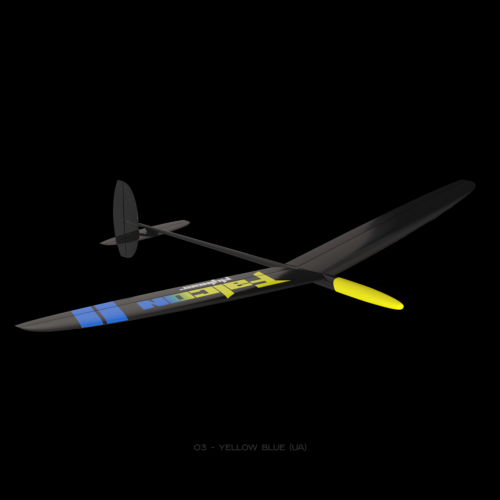
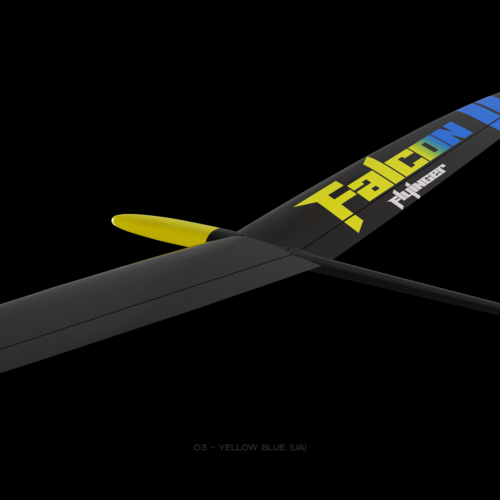
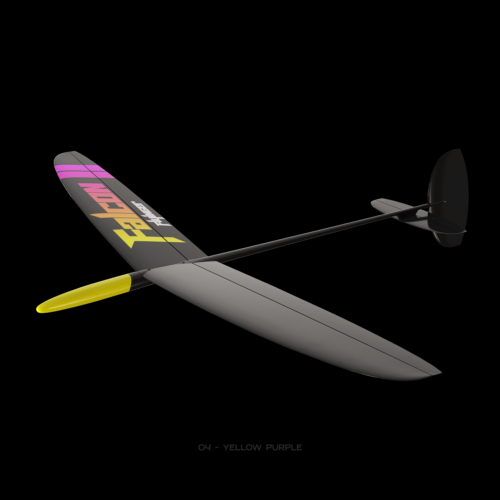
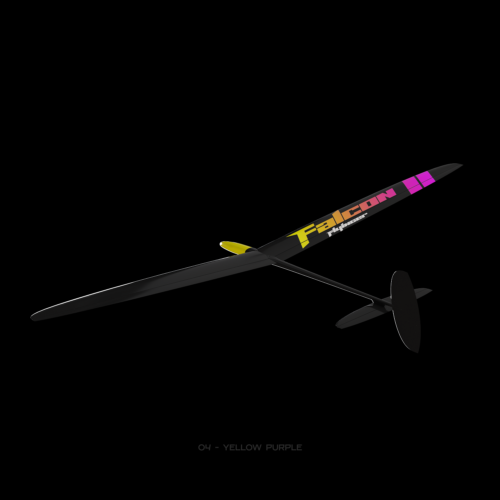
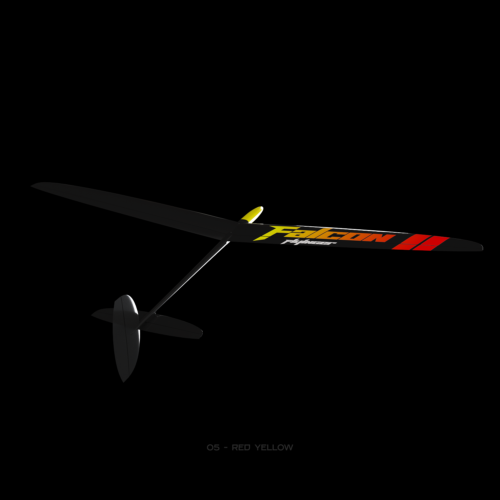
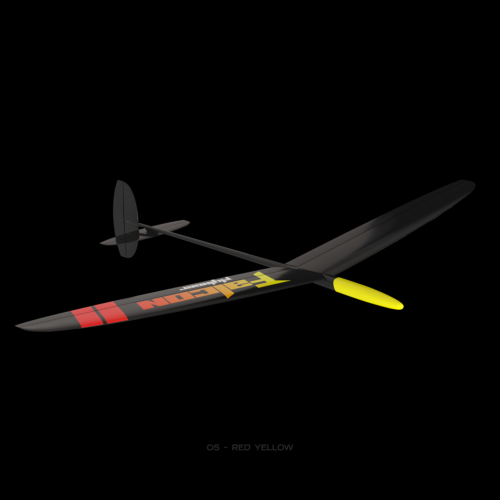
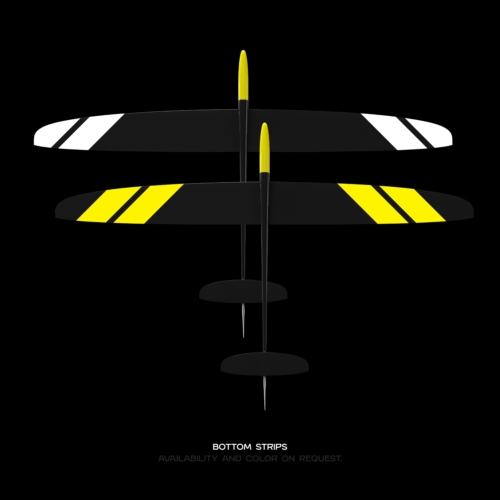
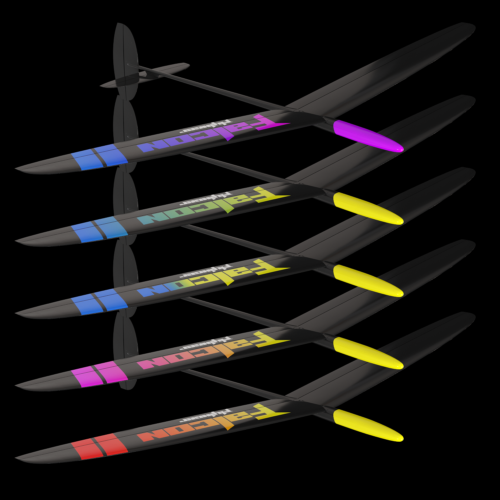
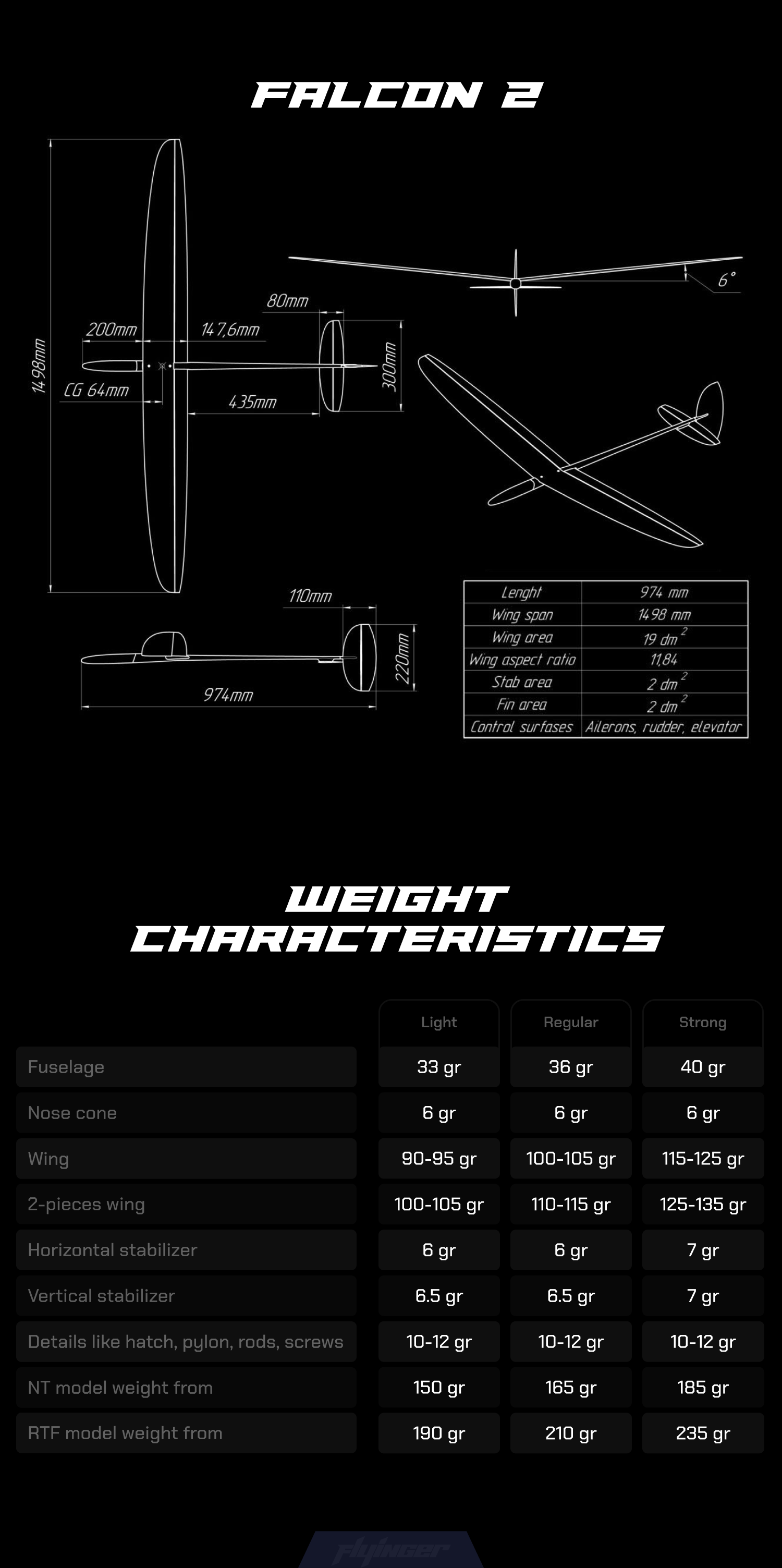
The Falcon 2's wing design unchanged - it is a proven performer and a very friendly wing that suits both low experience pilots and experts. Also unchanged is the simplicity of assembly, with a 4-in-the-pod fuselage. The improvements that were made on Falcon-2 are the following:
Smaller cross-section nose for lower drag; the pod still fits the same 4 servos, they just have a bit less space around them.
Shorter nose for lower moment of inertia; in most cases very little or no nose weight had been required in Falcons; and with an emphasis on making lighter tails, and the new shorter tail boom (see next bullet), it was thought to be beneficial to reduce the nose length by about 20mm.
Shorter tail boom by about 25mm for improved manoeuvrability and circling; with the generous areas of the horizontal and vertical tails, stability of Falcon had never been an issue; it was decided that a small reduction of the tail length would bring some extra manoeuvrability and improve the feel of the plane.
Slightly smaller vertical tail, again for improved circling and for weight reduction; the original vertical tail on Falcons is very generous - tests showed that reducing the fin area did not noticeably affect the launch performance.
Keyed and removable attachment of the vertical tail; this is one cool feature that needs to be seen in person to be fully appreciated; the vertical tail locks onto the boom very nicely and needs only a wrap of tape to keep it from sliding off; this can help those who pack their Falcons for travel; but it will also greatly simplify the assembly process, eliminating one critical step completely.
Designed by Oleg Golovidov and beautifully fabricated by HQ Composites in Ukraine. The quality of the parts is excellent. The fit and finish are superb. You have to see the plane to really appreciate how nice and shiny the surfaces are.
The model is all spread carbon composite construction. The fuselage is a very nice design with a good sized pod for easy instillation of the RC. Additionally underneath a ballast tunnel is built-in, to allow weights to be added easily when flying in windy conditions. The fuselage also features recesses to partially fair in the aileron horns. This ia a great innovation, featuring the simplicity of external aileron horns together with most of the drag saving of internal horns and pushrods.
The wing is beautifully molded from spread carbon with solid core construction, and a good surface finish. The wing aerodynamics are based on the Gerald Taylor's Synergy airfloil family modified to work at the lower wing chords of this high aspect ratio design. All the current stock have 2 piece wings, making storage and transport easier.
The fin and tailplane are substantial and again nicely finished.
The very complete accessory bag contains a very strong launch blade, all control horns, torque springs for the tail surfaces, pull cord wire and two servo trays, for four KST X08 or four MKS DS75K or HV75K servos. Also some inastallations have used BMS 101 servos.